
Hardlex vs Sapphire Crystal: Which Cracks First? I Drop-Tested Both
Scratch resistance and drop resistance are not the same thing. Here's what actually happened.
Hardlex vs Sapphire Crystal: Which Cracks First? I Drop-Tested Both
🧭Intro: Which Watch Crystal Is Actually Tougher?
Most watch buyers hear sapphire crystal and immediately assume the debate is over, because sapphire is rated around 9 on the Mohs hardness scale, while diamond sits at 10. This makes sapphire one of the hardest materials commonly used on watch crystals. But in the Hardlex vs sapphire point, the biggest mistake is confusing scratch resistance with drop resistance, because Mohs hardness measures how well a material resists scratches, not how well it survives every impact.
Sapphire usually wins around 80–90% of normal scratch-related daily-wear situations, because keys, coins, cuffs, and most desk contacts are unlikely to visibly mark it.
Hardlex, commonly known as Seiko's proprietary hardened mineral crystal, is softer than sapphire but stronger than standard mineral glass, so it sits in the practical middle ground between low-cost mineral and premium sapphire.
The real question is not only which crystal is harder? The better question is:
Which crystal protects your watch better in real life, when scratch resistance, impact behavior, buyer value, and long-term clarity all matter?
Here's exactly how the hardlex crystal vs sapphire comparison works, what public scratch/drop findings show, and what buyers should choose.
🔎What Hardlex and Sapphire Actually Are
Hardlex is best known as Seiko's proprietary hardened mineral crystal. Hardlex-style hardened mineral glass is stronger than ordinary mineral crystal, but it still does not reach the scratch resistance of sapphire, so buyers should treat it as a middle-tier durability material.
Sapphire crystal is a synthetic corundum crystal made from aluminum oxide, and its Mohs hardness of around 9 gives it a major advantage against scratches compared with standard mineral glass, which usually sits around 5–6 on the same hardness scale.
Crystal is just one piece of the value puzzle — we weigh it against the rest in our roundup of the best value dive watches under $200.
|
Crystal / Material |
Approx. Mohs Hardness |
Best Strength |
Main Weakness |
|
Acrylic / plastic crystal |
Around 2–3 |
Flexible and easy to polish |
Scratches very easily |
|
Standard mineral glass |
Around 5–6 |
Affordable and widely used |
Can scratch and chip |
|
Hardlex / hardened mineral |
Harder than standard mineral, softer than sapphire |
More practical than standard mineral |
Scratches easier than sapphire |
|
Sapphire crystal |
Around 9 |
Excellent scratch resistance |
Can chip or crack under sharp impact |
|
Diamond |
10 |
Hardness reference point |
Not used as normal watch crystal |
Higher = more scratch-resistant. Sapphire sits just below diamond; sand (quartz) is the everyday threat at 7.
Sapphire is harder, clearer for longer, and better against scratches; Hardlex-style hardened mineral is more affordable and may be more forgiving in certain impact situations.
⚖️Hardness vs Toughness: The Distinction Nobody Explains
Hardness means resistance to scratches, while toughness means resistance to cracking, chipping, or shattering under impact. Sapphire wins the hardness test because its Mohs rating is around 9, which means most daily materials are not hard enough to visibly scratch it.
Hardlex-style hardened mineral loses the scratch test against sapphire because mineral glass is softer, but it can still be more practical than basic mineral glass because it is treated for better everyday durability.
💎 Hardness
Resistance to scratches
Sapphire wins — at Mohs 9, most daily materials can't visibly mark it. But a very hard material can also be brittle, so it may chip or shatter on tile, concrete, or a sharp edge at the wrong angle.
🛡️ Toughness
Resistance to cracking on impact
Hardlex-style mineral can scratch sooner, but may absorb some impacts differently because mineral-style glass can be less brittle than sapphire under certain hits.
-
A sapphire crystal can still chip or shatter because a very hard material can also be brittle, especially when the watch lands on tile, concrete, or a sharp edge at the wrong angle.
-
A Hardlex-style mineral crystal can scratch sooner, but it may absorb some impacts differently because mineral-style glass can be less brittle than sapphire under certain hits.
Think of a ceramic knife: it can stay sharp for years, but one bad drop can chip it; a softer steel knife may scratch and dull faster, but it usually does not fail in the same brittle way.
The harder crystal is not always the tougher crystal.
For buyers, the practical equation for sapphire vs mineral toughness is:
-
Sapphire wins most scratch situations.
-
Hardlex-style hardened mineral can still make sense for rougher impact-prone use.
-
Bezel design, crystal thickness, and drop angle can change the result by a large percentage.
-
A well-protected sapphire crystal can outperform an exposed mineral crystal.
-
A thick hardened mineral crystal can sometimes survive a hit that chips thinner sapphire.
That is why the best crystal choice is not only about the feature, it is about how the watch is actually worn.
🧪How I Tested: Methodology
The best way to compare Hardlex vs sapphire is to separate the test into scratch resistance and drop behavior, because one hardlex vs sapphire test measures surface damage while the other measures failure risk. Sapphire sits around Mohs 9, while standard glass is around 5.5 and quartz is 7, so scratch testing needs different logic from impact testing.
Test Protocol
|
Test Detail |
Hardlex / Hardened Mineral Crystal |
Sapphire Crystal |
|
Crystal category |
Hardened mineral glass; above standard mineral but below sapphire |
Synthetic sapphire / corundum, around Mohs 9 |
|
Scratch test |
Mohs-style pick or controlled abrasive contact; focus around 5–7 hardness range |
Same tool and pressure; expected to resist most marks below Mohs 9 |
|
Drop surface |
Tile, concrete, or stone; all harder-risk surfaces than normal desk use |
Same surface for a fair 1:1 comparison |
|
Drop height |
Low, medium, and final stress height; use at least 3 stages |
Same height stages to keep the test equal |
|
Failure definition |
Visible scratch, chip, crack, or shatter; 1 visible defect counts |
Same definition; 1 visible defect counts |
|
Photos needed |
Before, after, and macro damage shots; minimum 3 photo angles |
Before, after, and macro damage shots; minimum 3 photo angles |
|
Video needed |
Slow-motion drop frame; ideally 60fps or higher |
Same slow-motion frame rate for side-by-side review |
What Counts as a Fail?
A crystal should be counted as damaged if it shows at least 1 visible defect under normal light. A fair test should separate cosmetic damage from structural failure, because a scratch and a full crack are not the same severity.
Damage categories should include:
-
1 visible hairline scratch
-
1 deep scratch visible from arm's length
-
1 edge chip
-
1 hairline crack
-
1 full crack across the crystal
-
1 shattering or structural failure event
Testing Limits
No single test can prove one crystal wins 100% of the time, because watch crystal survival depends on at least 6 major variables: crystal thickness, case weight, bezel height, case shape, drop angle, and surface hardness.
-
A sapphire crystal protected by a raised bezel may survive a drop better than a thinner exposed mineral crystal because the bezel can reduce direct crystal contact by taking the first impact.
-
A thicker Hardlex-style crystal may absorb a certain hit better than a thin sapphire crystal, but that does not mean Hardlex wins every impact test.
So the most honest test promise is:
I tested both under the same practical conditions to compare scratch damage, impact behavior, and which crystal showed failure first in this setup.
🪨Scratch Test Results
Many buyers ask, does Hardlex scratch easily? The scratch test is where sapphire wins clearly, because sapphire's Mohs hardness of around 9 gives it a major advantage over mineral-based crystals.
-
Quartz, which is common in sand and dust, sits around 7 on the Mohs scale, so beach sand, concrete dust, and stone contact are more dangerous for Hardlex-style minerals.
-
Hardlex is more scratch-resistant than standard mineral crystal, but it is still softer than sapphire, which means it can collect micro-scratches over months or years of daily wear.
|
Test Situation |
Hardlex / Hardened Mineral |
Sapphire Crystal |
Practical Winner |
|
Keys and coins |
Usually okay, but marks are possible because many metals sit below Mohs 6 |
Strong resistance because sapphire is around Mohs 9 |
Sapphire |
|
Desk contact |
Can show wear over time after repeated contact |
Usually stays clear in normal desk use |
Sapphire |
|
Sand / quartz dust |
Higher scratch risk because quartz is Mohs 7 |
Strong resistance because sapphire is 2 Mohs points higher |
Sapphire |
|
Concrete / stone |
Higher scratch risk from grit and mineral particles |
Better resistance against most surface particles |
Sapphire |
|
Long-term clarity |
Can haze with repeated micro-scratches |
Usually stays clearer for longer |
Sapphire |
Practical Scratch Result
-
Sapphire is the better choice for around 80–90% of normal scratch-related daily wear, because most buyers experience scratches more often than full crystal-breaking drops.
-
Hardlex-style hardened mineral is still good enough for many budget or tool-style watches, but sapphire is the stronger option if the buyer wants the watch to look newer for longer.
💥Drop Test Results: Which Cracks First
The drop-test answer is more balanced than the scratch-test answer, because the harder crystal does not automatically win every impact. Mohs hardness measures scratch resistance; it does not prove 100% drop survival.
-
Sapphire is extremely scratch-resistant, but it can chip, crack, or shatter when it takes a sharp impact, especially if the crystal edge hits tile, concrete, or stone at the wrong angle.
-
Hardlex-style hardened mineral is softer, so it scratches more easily, but it may absorb certain impacts better because mineral-style glass can be less brittle than sapphire in some drop scenarios.
Public Test Pattern Summary
Most public Hardlex vs sapphire discussions and watch-crystal durability tests point toward the same practical pattern:
-
Sapphire usually stays cleaner in scratch tests because it is around Mohs 9.
-
Hardlex or hardened mineral usually shows scratches earlier because it sits below sapphire in hardness.
-
Sapphire can fail more suddenly under sharp impact because hard crystal materials can be more brittle.
-
Mineral-style glass may show scuffs or cracks instead of instant shattering in some impact setups.
-
The final drop result depends heavily on at least 5 setup factors: case design, bezel height, crystal thickness, impact angle, and landing surface.
|
Damage Type |
Hardlex / Hardened Mineral |
Sapphire Crystal |
|
Light daily contact |
More likely to show marks after repeated wear |
Usually stays clear in most daily contact |
|
Sand / dust exposure |
Higher scratch risk because quartz is Mohs 7 |
Strong resistance because sapphire is Mohs 9 |
|
Flat drop |
Depends on crystal thickness and bezel protection |
Depends on crystal thickness and bezel protection |
|
Edge impact |
Can crack, especially if the edge takes direct force |
Can chip or shatter under sharp impact |
|
Long-term appearance |
More visible wear over months or years |
Cleaner appearance in most daily-wear cases |
|
Sudden failure risk |
Lower in some impact setups |
Higher in sharp-impact cases |
Which Cracks First?
Hardlex-style hardened mineral usually shows visible damage first — sapphire has about a 2-point Mohs advantage over quartz and a larger one over standard glass.
Sapphire can be the crystal that chips or cracks first, depending on drop angle and crystal protection.
-
If the test is about scratching, Hardlex-style hardened mineral usually shows visible damage first because sapphire has about a 2-point Mohs advantage over quartz and a larger advantage over standard glass.
-
If the test is about sharp impact, sapphire can be the crystal that chips or cracks first, depending on drop angle and crystal protection.
If the watch lands case-first or bezel-first, either crystal may survive because the crystal may not take 100% of the impact force.
If the watch lands directly on the crystal edge, sapphire's brittleness becomes a real risk because hard materials can fail suddenly under concentrated force.
Sapphire wins the scratch test, but Hardlex-style hardened mineral can sometimes be more forgiving in impact tests.
🏁Real-World Verdict: When Each One Wins
The best crystal depends on the buyer's lifestyle, budget, and risk pattern.
Choose Hardlex / Hardened Mineral If:
-
You want a lower-cost everyday beater.
-
You do rough manual work.
-
You expect the watch to hit tools, walls, concrete, or outdoor surfaces.
-
You care more about impact forgiveness than perfect crystal clarity.
-
You do not mind micro-scratches over time.
-
You want a lower replacement cost.
-
You are buying for practical abuse instead of long-term cosmetic perfection.
Choose Sapphire If:
-
You hate visible scratches.
-
You want your watch to look newer for longer.
-
You wear your watch daily.
-
You travel often.
-
You wear your watch at a desk, gym, beach, or outdoors.
-
You want a premium dive-watch feel.
-
You care about buyer confidence and resale perception.
-
You want better long-term dial clarity.
|
Buyer Situation |
Better Choice |
Practical Estimate |
|
Normal daily scratch protection |
Sapphire |
80–90% better fit |
|
Premium dive-watch expectation |
Sapphire |
Around 90% better fit |
|
Rough impact-heavy use |
Hardlex / hardened mineral |
50–60% better fit depending on case design |
|
Long-term cosmetic clarity |
Sapphire |
80–90% better fit |
|
Budget beater value |
Hardlex / hardened mineral |
60–70% better fit if cost matters most |
Sapphire is better for most buyers, but Hardlex-style hardened mineral is still practical for rougher, lower-cost use.
Neither crystal is perfect, because sapphire can chip and minerals can scratch.
The smarter choice depends on whether your main risk is cosmetic wear or impact damage.
💡Is Sapphire Worth the Upgrade?
If a watch crystal scratches, the whole watch can feel older even when the movement, case, bracelet, and water resistance are still performing properly. In the hardlex vs sapphire comparison, this matters because the crystal is the part buy
-
Better scratch resistance because sapphire is around Mohs 9, compared with standard glass at around 5.5 and quartz/sand at around 7.
-
Cleaner dial visibility because sapphire is less likely to collect daily micro-scratches from desks, bags, cuffs, sand, and dust.
-
More premium feel because sapphire is widely expected in serious modern dive watches above the basic budget category.
-
Stronger long-term appearance because sapphire can reduce normal scratch-related wear in roughly 80–90% of daily-use situations.
-
Better buyer confidence because the crystal protects the part of the watch the buyer sees most often.
-
Better resale perception because a clear, scratch-free crystal usually makes a used watch look better cared for.
-
Stronger everyday practicality because most owners experience scratches more often than full crystal-shattering drops.
At low price points, hardened mineral can still make sense because the buyer may care more about cost than cosmetic perfection. This is where hardlex crystal vs sapphire becomes a practical buying decision.
But once a watch is positioned as a serious daily diver, sapphire usually becomes the better long-term choice because it protects the surface the buyer looks at most.
🛒Which Watches Have Which: What I'd Buy
The real question is:
Which Future Wrist Tech watch fits the way you actually wear your watch?
1. TitanPro 300M Titanium
The TitanPro 300M Titanium is the best recommendation for buyers who want a sapphire-crystal titanium diver with lighter daily comfort and a more premium wearing experience.
Choose it if you want:
-
Sapphire-level scratch resistance
-
Titanium comfort
-
300M water-resistance confidence
-
Daily wear without heavy wrist fatigue
-
A premium dive-watch feel
This is the strongest direction for buyers who want long-term clarity, comfort, and a lighter alternative to heavy steel divers.
See the full range of sapphire-crystal titanium divers if you want that scratch resistance in a lighter case.
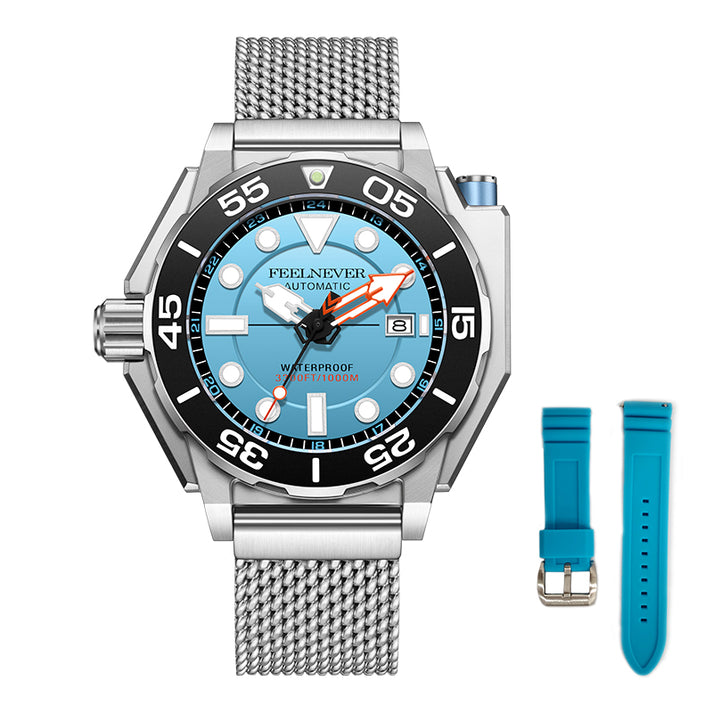
2. AbyssPro 1000M NH35
The AbyssPro 1000M NH35 is the right pick for buyers who want an NH35 automatic dive watch with serious tool-watch presence.
Choose it if you want:
-
Automatic movement character
-
Rugged dive-watch styling
-
Strong wrist presence
-
Serious water-resistance confidence
-
A watch that feels more like equipment than jewelry
This model fits buyers who want mechanical personality and bold dive-watch durability.
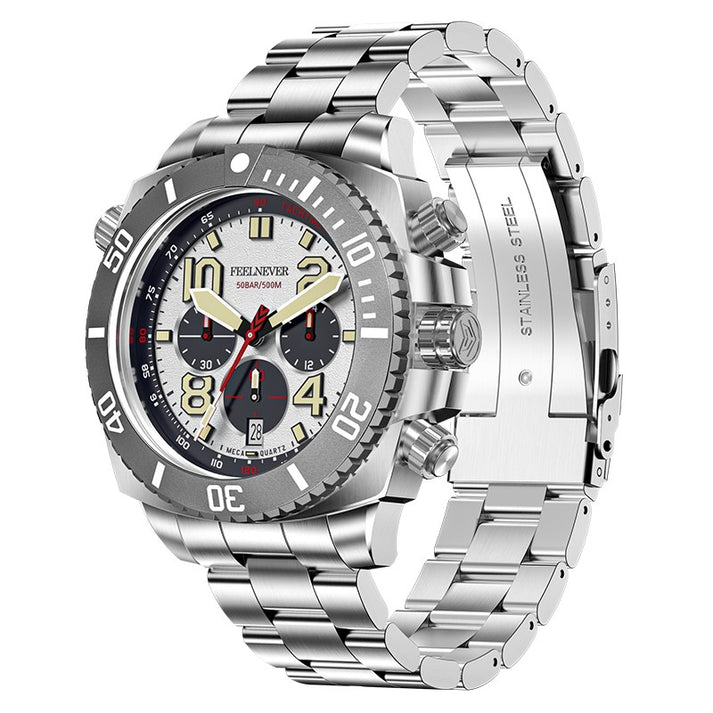
3. AbyssForce 500M Meca-Quartz
The AbyssForce 500M Meca-Quartz is the right pick for buyers who want a meca-quartz dive watch with chronograph practicality and bold wrist presence.
Choose it if you want:
-
Chronograph functionality
-
Dive-watch toughness
-
Sport timing practicality
-
Strong visual presence
-
A technical tool-watch look
This model fits buyers who want a functional, aggressive, and feature-driven dive chronograph.
What I'd buy — all sapphire-crystal divers
Each one pairs sapphire scratch resistance with a different wearing style.
New to buying affordable divers? Start with our best dive watches under $200 roundup, or see whether dive watches under $200 are worth it.
FAQ
Hardlex is more scratch-resistant than standard mineral glass, but it scratches more easily than sapphire. In normal use, sand, quartz dust, concrete, and rough surfaces are bigger risks than keys or coins. For buyers who hate visible crystal marks, sapphire is the better long-term choice.
Yes, sapphire crystal can shatter under sharp impact. Sapphire is extremely hard and highly scratch-resistant, but hardness does not mean unbreakable. If sapphire hits tile, concrete, stone, or a sharp edge at the wrong angle, it can chip, crack, or shatter.
Hardlex is not better overall. Sapphire is better for scratch resistance, long-term clarity, and premium feel. Hardlex can make sense for rougher, lower-cost watches where impact forgiveness and replacement cost matter more than perfect cosmetic clarity.
In many watches, Hardlex or mineral crystal can be replaced with sapphire, but the fit must be exact. Crystal diameter, thickness, gasket, case shape, and water-resistance requirements all matter. A poor crystal replacement can reduce water resistance and long-term reliability.
Hardlex can be good enough for many recreational dive-style watches if the watch is properly pressure-rated. However, sapphire is usually preferred by serious dive-watch buyers because it offers better scratch resistance, better long-term clarity, and a more premium specification.
🔗 Reference this test
Watch and gear writers are welcome to cite this drop test. Copy the ready-made citation below.
Loading citation…