
Are Dive Watches Under $200 Actually Worth It?
When the numbers match how you'll really wear it — yes. Here's exactly what you get and give up.
Are Dive Watches Under $200 Actually Worth It?
A $200 dive watch can be a smart buy but only when the numbers match the way you actually plan to wear it.
The real question is not whether a cheap diver can look good. Most can. The better question is whether it can give you clear water resistance, a reliable movement, a wearable case size, a durable crystal, and enough daily confidence to justify the price.
In the current affordable dive-watch category, buyers can find models from $139 to $199, with one visible variant range reaching $249. The collection includes 6 in-stock watches, case diameters from 40mm to 48mm, case thicknesses from 11mm to 20mm, and water-resistance tiers from 10 BAR to 100 BAR.
Worth it — for utility, not luxury
Great for daily wear, swimming, travel, and first-time mechanical ownership. Less ideal for luxury finishing, resale value, or professional certification.
Dive watches under $200 are worth it for utility, daily wear, swimming, travel, and first-time mechanical ownership. They are less ideal for luxury finishing, resale value, professional certification, or heirloom-level ownership.
✅What You Actually GET Under $200
Under $200, a buyer can still get real functionality if the product page is transparent. A good affordable diver should not hide the basics: water resistance, movement, crystal, size, warranty, and return policy.
You can get:
-
200M / 20 BAR water resistance for daily wear, swimming, beach trips, and casual water use.
-
300M / 30 BAR water resistance, which gives 50% more listed depth rating than 200M.
-
500M / 50 BAR water resistance, which gives 2.5× more listed depth rating than 200M.
-
1000M / 100 BAR water resistance, which gives 5× more listed depth rating than 200M.
-
Automatic movement options, including NH35, NH36, and other mechanical categories shown in the movement filters.
-
Meca-quartz chronograph utility, with one 500M chronograph listing showing ±20 seconds per month accuracy.
-
Sapphire crystal on several models, which matters because Mohs 9 sapphire is far more scratch-resistant than Mohs 5–6 mineral crystal.
-
Case sizes from 40mm to 48mm, giving an 8mm spread between the smallest and largest listed case diameter.
-
Case thickness from 11mm to 20mm, giving a 9mm spread between the thinnest and thickest listed watch.
-
Warranty support, with product pages showing 1-year warranty and 30-day easy returns on multiple models.
The practical value is clear: under $200 can buy real utility. It usually cannot buy luxury-level refinement.
⚖️What You GIVE UP vs. $200–$500 Dive Watches
A sub-$200 diver can be useful, but the lower price usually shows up somewhere. Compared with the $200–$500 range, buyers usually give up finishing quality, bracelet refinement, tighter movement regulation, stronger lume, and better long-term polish.
The tradeoff is not always bad. It just needs to be understood before buying.
✓ You Get
- Real 200M–1000M water resistance
- Automatic, mechanical & meca-quartz movements
- Sapphire crystal on several models
- 1-year warranty + 30-day returns
- Low-risk utility & daily durability
– You Give Up
- Premium case finishing & smoother edges
- Refined bracelets, clasps & bezel feel
- Tighter movement regulation & stronger lume
- Professional certification clarity
- Resale / investment value
You usually give up:
-
Finishing quality: A sub-$200 case may focus on basic brushing and polishing, while a $200–$500 diver often feels smoother around the edges.
-
Bracelet refinement: A lower-cost bracelet may have fewer micro-adjustments and a simpler clasp, while a $300–$500 watch often feels more secure and more precise.
-
Bezel feel: A budget bezel can work, but it may not feel as tight, clean, or satisfying as a higher-priced diver.
-
Movement regulation: Automatic watches under $200 can be reliable, but they may not be regulated as closely as higher-priced mechanical watches.
-
Crystal consistency: Some models use sapphire, while others use mineral crystal; sapphire is harder at Mohs 9, while mineral sits around Mohs 5–6.
-
Daily comfort: A 48mm case or 20mm thick case can feel impressive at first but less comfortable after a full day.
-
Weight balance: A heavy steel diver can feel substantial, but one listed heavy-duty model reaches 541g, which is more than enough to affect daily comfort.
-
Certification clarity: A listed 200M, 500M, or 1000M rating does not automatically prove professional dive certification unless the product page clearly states that testing standard.
-
Resale value: Most sub-$200 divers should be bought for use value, not investment value.
So what actually get under $200:
-
Under $200 usually buys utility, specs, and low-risk ownership.
-
$200–$500 usually buys better finishing, better bracelets, stronger QC, and better long-term comfort.
-
$500+ usually starts adding stronger brand equity, resale confidence, and ownership prestige.
So, are cheap dive watches worth it? Yes, when you buy them for function instead of expecting luxury refinement.
More spend shifts the value from raw utility toward refinement and prestige.
🎯When Under $200 Is Smart / When to Stretch
A dive watch under $200 is smart when the buyer wants a practical, water-ready watch without treating it like a luxury investment. TitanPro 300M Titanium is the best diver watch to wear everywhere.
It is less smart when the buyer wants a watch to serve as a refined daily piece for 3–5 years with premium finishing, bracelet feel, and long-term collector confidence.
Under $200 is smart if…
-
It is your first dive watch: A $139–$199 watch lets you test case size, movement type, and water resistance before spending $300–$500.
-
You want a travel watch: A sub-$200 diver carries less financial stress than a $500+ daily watch.
-
You want a beater watch: A $139 or $179 watch can handle scratches, knocks, and daily abuse with less regret.
-
You want swimming confidence: A clear 200M+ rating is enough for most casual water use.
-
You want a first automatic: An NH35 or NH36 option gives mechanical ownership without luxury pricing.
-
You want visible specs: The category can offer 300M, 500M, and even 1000M ratings under or near $200.
-
You care more about utility than prestige: A sub-$200 diver is strongest when judged by function per dollar.
Stretch to $200–$500 if…
-
You want one main watch: A watch worn 5–7 days per week should feel better on the wrist, clasp, bezel, and bracelet.
-
You want stronger finishing: The $200–$500 range usually gives cleaner brushing, smoother case edges, and better tactile feel.
-
You want a better bracelet: Higher-priced divers often have better end links, clasps, and adjustment options.
-
You want stronger lume: Better lume matters if you actually use the watch in low light, night travel, or water settings.
-
You want better regulation: A higher budget can give better accuracy expectations from mechanical movements.
-
You care about resale: Sub-$200 watches rarely hold value like established mid-range or premium watches.
-
You want professional dive confidence: Serious diving needs more than a printed rating; it needs maintenance, pressure testing, and clear certification claims.
💎The Sweet Spot
The strongest value zone is usually $139–$199, because it gives buyers real specifications without pushing into the $200–$500 refinement tier.
This range works because buyers can choose based on the number that matters most: lowest price, daily comfort, water resistance, crystal, movement, or case size.
Best value paths under $200:
|
Value Path |
What It Means |
Best For |
|
$139 entry point |
$139 is the lowest visible price, making it the best starting point for budget automatic buyers. |
First-time buyers who want the lowest-risk automatic option |
|
$179 heavy-duty option |
$179 gives a heavy-duty mechanical option at $20 below the $199 models. |
Buyers who want steel presence without reaching $199 |
|
$189.99 clean 200M option |
$189.99 keeps a clean 200M option $10.01 below the $200 line. |
Buyers who want a daily diver under $200 |
|
$199 stronger-spec options |
$199 gives access to stronger options, including 300M, 500M, and select 1000M choices. |
Buyers who want maximum specs while staying near $200 |
|
200M baseline |
200M is the practical baseline for swimming and daily water exposure. |
Daily wear, beach use, and casual water use |
|
300M upgrade |
300M gives 1.5× the listed rating of 200M. |
Buyers who want extra water confidence |
|
500M tool-watch tier |
500M gives 2.5× the listed rating of 200M. |
Buyers who want stronger tool-watch appeal |
|
1000M maximum rating |
1000M gives 5× the listed rating of 200M. |
Buyers who want the biggest depth-rating story |
|
40.7mm–43mm comfort range |
40.7mm–43mm is the stronger comfort range for daily use. |
Smaller wrists and everyday wear |
|
46mm–48mm presence range |
46mm–48mm is better for buyers who want oversized tool-watch presence. |
Larger wrists and bold-watch buyers |
|
Sapphire priority |
Sapphire crystal should be prioritized when long-term scratch resistance matters most. |
Buyers worried about scratches |
|
Mineral crystal tradeoff |
Mineral crystal can still make sense if the watch offers unusually strong depth-rating or movement value. |
Buyers prioritizing specs over scratch resistance |
Best value by buyer type:
|
Buyer Type |
Best Priority |
Why It Matters |
|
Lowest-price buyer |
Choose the $139 path. |
It gives the lowest entry cost under the $200 category. |
|
Daily-wear buyer |
Prioritize 40–43mm case size and lower thickness. |
Smaller, thinner watches are easier to wear for long hours. |
|
Depth-rating buyer |
Prioritize 500M or 1000M. |
These offer the strongest water-resistance numbers in the category. |
|
Scratch-resistance buyer |
Prioritize sapphire crystal at Mohs 9. |
Sapphire resists scratches far better than mineral crystal. |
|
Mechanical buyer |
Prioritize NH35, NH36, or Japanese mechanical options. |
These give the traditional automatic/mechanical watch experience. |
|
Accuracy buyer |
Prioritize meca-quartz. |
It gives better timing convenience and practical accuracy. |
|
Comfort buyer |
Avoid oversized 47.5–48mm cases unless wrist size supports them. |
Large cases can feel heavy and uncomfortable for daily use. |
|
Heavy-tool-watch buyer |
Look for 500M, steel build, and larger case dimensions. |
These create the boldest tool-watch feel under $200. |
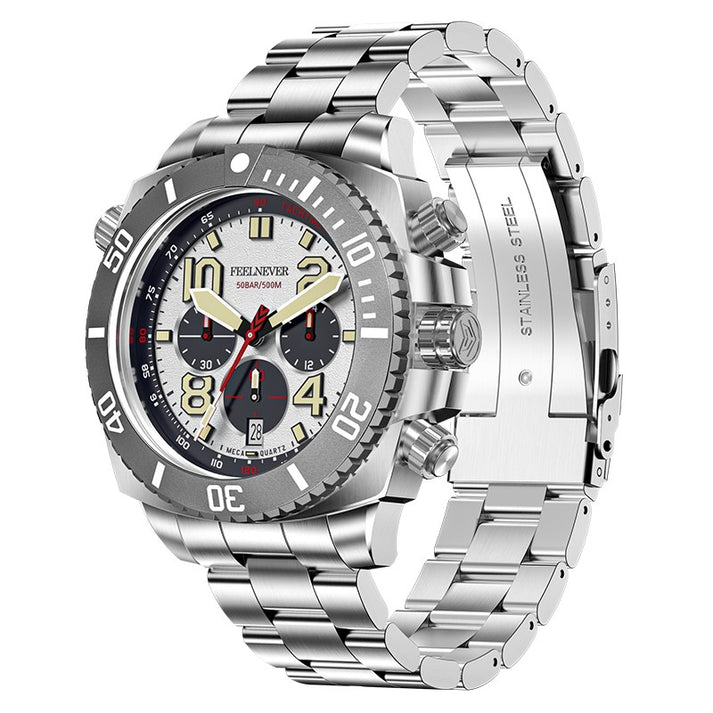
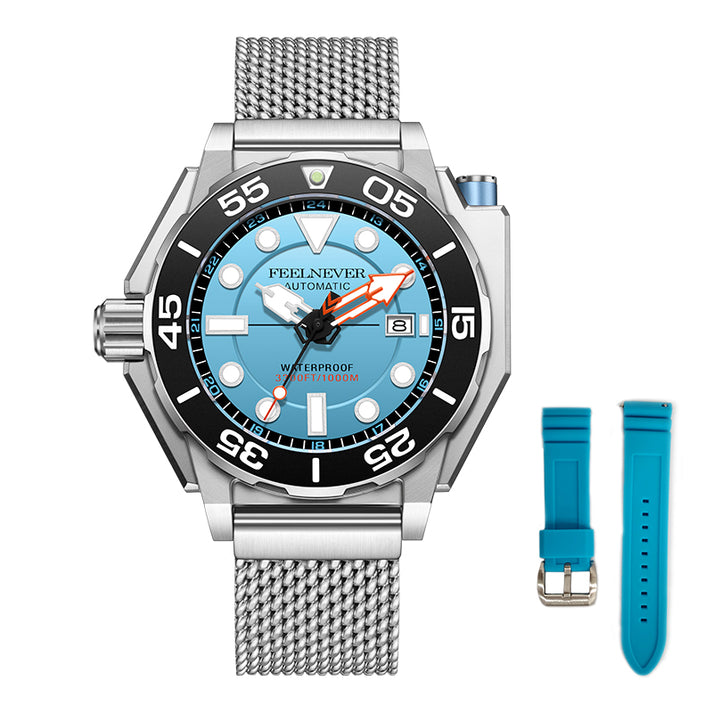
The strongest value paths
From the everyday comfort pick to the biggest depth-rating story — all near $200.
FAQ
Yes, dive watches under $200 are worth it when the buyer wants utility, water confidence, daily durability, and low-risk ownership. The strongest under-$200 options can offer 200M–1000M water resistance, automatic or meca-quartz movements, and sapphire crystal on several models.
Yes, cheap dive watches are worth it if the specifications are clear. A good cheap diver should list water resistance, movement type, crystal material, case size, warranty, and return policy before the buyer makes a decision.
A $200 dive watch can be good enough for swimming, snorkeling, beach use, and casual water exposure if it has a clear 200M+ rating and proper care. For serious diving, buyers should verify pressure testing, seals, servicing, and certification claims.
A cheap automatic is better for mechanical character, while quartz or meca-quartz is better for accuracy and convenience. One meca-quartz chronograph listing states ±20 seconds per month, which is much more convenient than many automatics measured in seconds per day.
Usually, no. A sub-$200 watch should be bought for use value, not resale value. The benefit is practical ownership: water resistance, daily wear, travel use, first automatic experience, and low-risk durability.
Sapphire is not mandatory, but it is strongly preferred. Sapphire at Mohs 9 resists scratches much better than mineral crystal around Mohs 5–6, especially against sand, metal edges, rock, and daily wear hazards.
Avoid any cheap dive watch with no water-resistance number, no movement disclosure, no crystal disclosure, no case size, no warranty, no return policy, or a large 46–48mm case with no wrist-size guidance.
If you want utility under $200, compare by price, water resistance, crystal, movement, case size, and thickness before choosing. If you want better finishing, bracelet quality, and long-term daily refinement, move toward the $200–$500 range.
Under $200 buys utility. $200–$500 buys refinement. The right choice is the watch whose numbers match your wrist, water use, and expectations.
🔗 Reference this guide
Watch blogs and writers are welcome to cite this guide. Copy the ready-made citation below.
Loading citation…