
Speedmaster vs Seamaster: 7 Dive Facts You Need in 2026
The decision becomes much easier once you ask one simple question — and it has everything to do with water.
If you are choosing between the Omega Speedmaster and the Omega Seamaster, the decision becomes much easier once you ask one question:
Both watches are well-known Omega models, but they were built for different purposes. The Speedmaster is a chronograph with spaceflight history. The Seamaster is designed as a dive watch.
That difference matters.
Some buyers see water resistant on a features list and assume the watch is safe for swimming or diving. But water resistance is not that simple. A watch may handle splashes and still be the wrong choice for swimming, snorkeling, or scuba use.
This guide explains the practical differences between the Speedmaster and Seamaster, including water resistance, ISO 6425 certification, crown and pusher design, bezels, helium escape valves, and real-world use.
What Speedmaster vs Seamaster Actually Means for Divers
The main difference is simple:
- The Seamaster is made for water.
- The Speedmaster is not.
According to Omega's official specifications, the Seamaster Diver 300M is rated to 300 metres, while the Speedmaster Professional Moonwatch is usually rated to 50 metres. That 50m rating is where many buyers get confused.
A 50m rating does not mean the watch should be taken 50 metres underwater. In practical use, it is closer to protection against splashes, rain, handwashing, and brief contact with water. It is not the rating most buyers should rely on for swimming, snorkeling, or diving.
This is where the ISO 6425 diver's watch standard matters. ISO 6425 does not only look at water resistance. It also includes pressure resistance, shock resistance, magnetic resistance, thermal shock, and underwater legibility.
That is different from a general water resistant label.
- The Seamaster fits the dive-watch category.
- The Speedmaster fits the chronograph category.
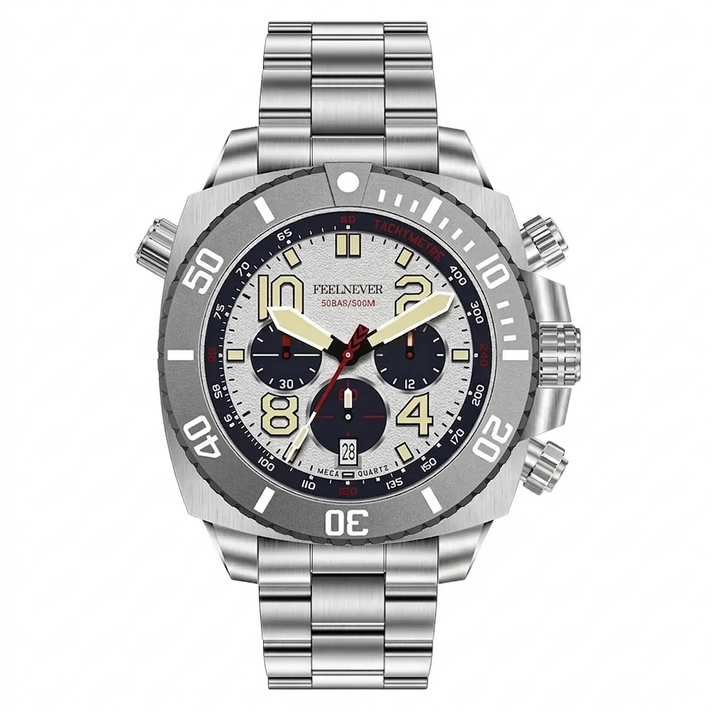
AbyssForce 500M Automatic Dive Watch
If you're shopping for a true dive watch built for water — not just splash resistance — the AbyssForce delivers 500M water resistance with a sapphire crystal and proper dive-watch construction. Made for swimmers, snorkelers, and recreational divers.
Shop AbyssForce 500M →The Real Problem Behind Speedmaster vs Seamaster
The problem is not that either watch is poorly made. The problem is that many buyers read water-resistance ratings too literally.
You may see two Omega watches in the same store. Both feel solid. Both are expensive. Both are described as water resistant. So it is easy to assume both can handle similar use.
But that is not how watch design works.
A watch can be well built and still not be suitable for diving. The Speedmaster is a good example. It is a respected chronograph, but it was not designed as an underwater timing tool.
The FTC's consumer guidance on water-resistant goods has also pointed out that depth ratings are based on controlled pressure tests, not every real-world water situation. That matters because swimming, hot showers, saltwater, and repeated exposure can all create different risks.
Water damage can also be expensive. If moisture enters the case, it can affect the movement, dial, hands, seals, and long-term value. The damage may not show immediately, which makes the risk easier to underestimate.
For buyers, the practical question is not Which watch is better?
The better question is:
Why Most Buyers Get Speedmaster vs Seamaster Wrong
The Speedmaster vs Seamaster comparison looks simple at first.
- One is a chronograph.
- One is a dive watch.
But online discussions can make the answer confusing. Some owners say they wore a Speedmaster near water without a problem. Others recommend pressure-testing any watch before swimming. Both points can be true, but they do not change the main issue.
A watch surviving water once does not mean it is designed for repeated water exposure. Most mistakes come from three assumptions.
Mistake 1: Thinking 50m Means Swimming Is Safe
A 50m water-resistance rating is usually tested under controlled conditions. Real use is different.
- Swimming creates movement and pressure. Hot showers add heat and steam. Saltwater adds corrosion risk if the watch is not properly designed, sealed, or maintained.
- Omega's own customer-care guidance on water resistance treats 50m-rated watches as suitable for light exposure, not serious swimming, snorkeling, or diving.
The Speedmaster may handle light contact with water, but it should not be treated as a swimming watch. For regular water use, the Seamaster is the safer choice. If you specifically want a watch built for laps and pool sessions, browse our dedicated swimming watches collection.
Mistake 2: Focusing Too Much on the Helium Escape Valve
The Seamaster Diver 300M includes a helium escape valve. Many buyers notice it because it is a visible part of the design. For most owners, it will never be used.
- Omega's Seamaster Professional manual explains the purpose of the helium escape valve, but the feature is mainly relevant for saturation divers who spend time in pressurized environments. It is not a necessary feature for casual swimming, snorkeling, or normal recreational scuba diving.
- The Seamaster is not the better water watch because of the valve alone. It is better because of the full dive-watch construction: water resistance, sealing, crown design, bezel, legibility, and dive-focused testing.
Mistake 3: Assuming Professional Means Professional Diving
The name Speedmaster Professional can be misleading if you only look at the word Professional. In this case, it does not mean professional diving. NASA's Manned Spacecraft Operations qualification records connect the Speedmaster Professional to spaceflight history, not ISO dive-watch certification.
- The Speedmaster is professional as a chronograph.
- The Seamaster is professional as a dive watch.
Those are different use cases.
The Speedmaster vs Seamaster Dive Plan: 7 Steps to the Right Choice
Match the Watch to Your Actual Use
Start with your real routine.
- Will you wear the watch mainly at work, while traveling, or with casual outfits?
- Or will you wear it while swimming, snorkeling, boating, or diving?
For dry daily wear, the Speedmaster makes sense. For regular water use, the Seamaster is the better fit.
The difference between ISO 22810 water-resistant watch testing and ISO 6425 diver's watch testing is important here. ISO 22810 covers general water resistance, while ISO 6425 applies to watches designed for diving.
A simple way to understand water resistance:
The rating matters, but the design matters more.
Check for ISO 6425 Certification
If you want a real dive watch, check more than the depth number. The ISO 6425 standard for diver's watches means the watch has been tested for more than basic water resistance. It also considers pressure, legibility, shock, magnetism, and thermal shock.
- The Seamaster Diver 300M is designed for that category. The Speedmaster Professional is not. This does not make the Speedmaster a bad watch. It simply means it should not be used as a dive watch.
Look at the Crown and Pushers
Water resistance often depends on the weakest entry points: the crown, pushers, caseback, crystal, and gaskets.
- This is especially important with the Speedmaster because it is a chronograph. Chronograph pushers should not be pressed underwater. Using pushers in water can increase the risk of moisture entering the case.
- Omega's technical specifications show how different the construction priorities are between the Speedmaster and Seamaster. The Seamaster is built with water use in mind, using dive-watch sealing, a screw-down crown, and case construction designed for underwater use.
This is one of the clearest practical differences between the two models.
Understand the Crystal and Case Construction
The Speedmaster's design comes from a different purpose.
- Omega's heritage material on Hesalite and sapphire explains why the classic Speedmaster crystal choice was tied to NASA-related requirements. Hesalite does not shatter the same way some materials can, but it scratches more easily and was not selected for repeated underwater pressure.
- The Seamaster has a case and crystal setup designed for water use.
This does not mean one watch is better in every situation. It means each watch was built around a different environment.
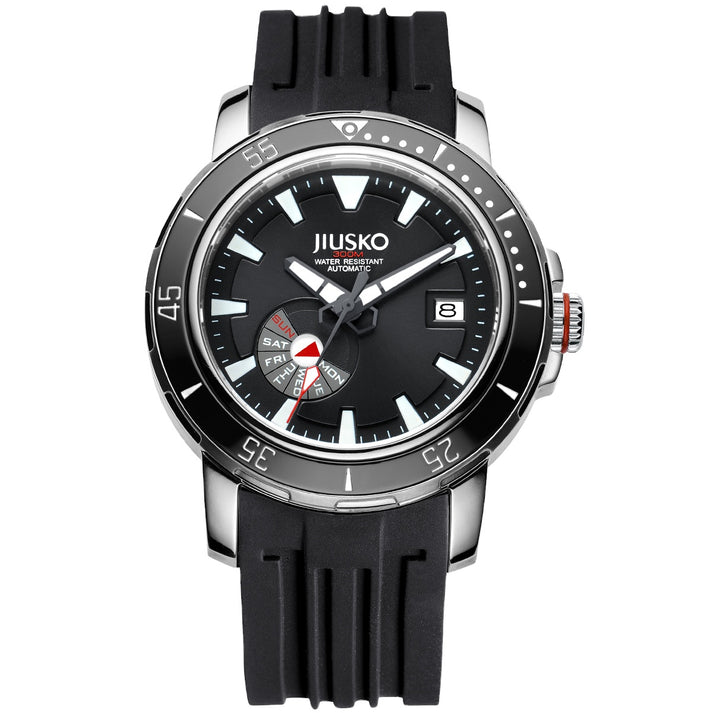
FWT TitanPro 43mm Titanium Diver 300M
Built the right way for water — titanium case, sapphire crystal, reliable NH36 automatic movement, and full 300M dive-watch construction. The kind of build the Speedmaster was never engineered for.
Shop TitanPro 300M →Compare the Bezels
The Seamaster has a unidirectional rotating dive bezel.
- That matters because a dive bezel helps track elapsed time underwater. The PADI Open Water Diver Manual explains the importance of tracking time during a dive, and a unidirectional bezel supports that by moving only in the safer direction if accidentally knocked.
The Speedmaster has a tachymeter bezel. A tachymeter is useful for measuring speed over a known distance. It is not useful for timing a dive. For underwater timing, the Seamaster has the correct bezel.
Match the Watch to Your Dive Profile
For most recreational scuba diving, the Seamaster Diver 300M is more than enough.
- The DAN Annual Diving Report shows that recreational dives are usually far shallower than 300 metres. The Seamaster's rating gives a large safety margin when the watch is properly maintained and pressure-tested.
- For more extreme diving, Omega also offers deeper-rated Seamaster models such as the Planet Ocean and Ultra Deep.
For everyday swimming, snorkeling, and recreational diving, the Seamaster Diver 300M is the more practical option. You can also explore our full men's dive watches collection for alternatives across price ranges.
Use the Speedmaster for Its Intended Purpose
The Speedmaster does not need to be a dive watch.
- It works best as a chronograph, daily watch, travel watch, and collector piece. It is well suited to dry-land use, office wear, casual outfits, and timing everyday events.
- Omega's service network reports also show why using a watch outside its intended water-resistance limits can become costly over time.
The issue is not quality. The issue is using case. A simple two-watch approach would be:
- Seamaster: swimming, snorkeling, diving, beach trips, boating
- Speedmaster: daily wear, travel, timing, office use, collector wear
This avoids forcing one watch to do a job it was not built for.
Looking for a Watch Built for Water?
Browse our purpose-built dive watch collections — each piece engineered for the conditions a Speedmaster was never made for.
What Happens If You Ignore the Speedmaster vs Seamaster Difference?
Ignoring the difference between the Speedmaster and Seamaster can lead to avoidable costs.
1. Water Damage
If water enters a Speedmaster, it can affect the movement, dial, hands, seals, and internal parts. Even small moisture exposure can create long-term problems if it is not handled quickly.
2. Warranty Issues
Omega's international warranty terms exclude damage caused by misuse or exposure beyond the watch's intended water-resistance rating. That means if a Speedmaster is damaged during swimming or diving, the repair may not be covered.
3. Expensive Repairs
Mechanical chronographs can be expensive to service. Omega's service pricing bulletin shows why water-related repair work can become costly, especially when moisture reaches the movement.
4. Lower Resale Value
Condition matters in the secondary market. The Chrono24 market report on damage impact shows that water damage, dial marks, corrosion, or replacement parts can reduce buyer confidence and affect resale value.
5. Reduced Safety Margin Underwater
If you use a watch as a backup timing tool while diving, it should be designed for that purpose.
The PADI Standards & Procedures Manual supports the idea that reliable timing tools matter underwater. A non-ISO-certified chronograph is not the right tool for that role. The Seamaster is the more suitable choice for underwater timing.
What Speedmaster vs Seamaster Done Right Looks Like
A practical setup is simple.
- Use the Seamaster when water is part of the plan. Before swimming or diving, make sure the crown is secure and the watch has been pressure-tested if needed. Use the dive bezel for timing, and rinse the watch after saltwater exposure.
- Use the Speedmaster when you want a chronograph for dry daily wear. It works well for office use, travel, casual settings, and collector enjoyment.
As discussed in Hodinkee's writing on owning multiple watches, different watches often make sense because they solve different problems.
This is the cleanest way to compare them:
- The Seamaster is the water watch.
- The Speedmaster is the chronograph.

If lightweight comfort matters to you for everyday and active wear, our titanium dive watches collection is worth a closer look.
Speedmaster vs Seamaster FAQ
Can You Dive With an Omega Speedmaster?
No, it is not recommended.
Omega's customer-care documentation describes 50m-rated watches as suitable for light exposure, not swimming, snorkeling, or scuba diving. The Speedmaster Professional is also not ISO 6425 certified.
What Is the Main Difference Between Speedmaster and Seamaster?
The Speedmaster is a chronograph designed for timing and dry-land use. The Seamaster is a dive watch designed for water resistance, underwater legibility, and aquatic use.
Is the Seamaster Better Than the Speedmaster?
Not in every situation. The Seamaster is better for swimming, diving, snorkeling, and active water use. The Speedmaster is better for chronograph use, daily style, and collector interest.
The better choice depends on how you plan to wear the watch.
Do I Need the Helium Escape Valve on a Seamaster?
Most owners do not need it. Omega's Seamaster Professional manual explains that the helium escape valve is mainly useful for saturation diving. It is not necessary for normal swimming, snorkeling, or recreational scuba diving.
What Does ISO 6425 Mean?
The ISO 6425 diver's watch standard tests pressure resistance, legibility, shock resistance, magnetic resistance, and thermal shock. This makes it more meaningful than a simple depth rating.
Can You Swim with a Speedmaster?
It is not recommended. Some owners may have done it without immediate damage, but that does not mean the watch is designed for swimming. For regular water exposure, the Seamaster is the better option.
What Is the Best Omega for Scuba Diving?
For most recreational divers, the Seamaster Diver 300M is the practical choice. Omega's official specifications list the Diver 300M with strong water resistance, a dive bezel, readable lume, and water-focused case construction.
For more extreme diving, the Planet Ocean or Ultra Deep may be more suitable.
Will a Speedmaster Lose Value If It Gets Wet?
Yes, it can. The Chrono24 market report on damage impact and Omega's international warranty terms both make the same point clear: condition matters, and water damage can affect both repair coverage and resale value.
Your Next Step with Speedmaster vs Seamaster
Choose the watch according to use. If you swim, snorkel, dive, or spend a lot of time around water, the Seamaster Diver 300M is the more suitable choice. If you want a chronograph for dry daily wear, travel, timing, and collector value, the Speedmaster makes more sense.
The right choice is not about which model has the stronger reputation. It is about which one fits your actual use.
Sources & Further Reading
- Omega Official Specifications, 2025 — omegawatches.com
- International Organization for Standardization, ISO 6425:2018 — Horology — Divers' watches
- International Organization for Standardization, ISO 22810:2010 — Horology — Water-resistant watches
- Heaton, J. Depth Charge: A Diver's Watch Story, 2023
- U.S. Federal Trade Commission, Consumer Advisory on Water-Resistant Goods, 2024
- WatchTime Industry Survey on Water Resistance Misconceptions, 2023
- Sinn, H. Engineering for Extremes: Watchmaking Beyond the Norm, Sinn Spezialuhren, 2018
- Smith, R. Interview, Revolution Watch, 2024
- NASA Technical Memorandum X-58031, Manned Spacecraft Operations Qualification, 1965
- Omega Customer Care Documentation, 2025
- Omega Seamaster Professional Manual, 2024
- British Horological Institute, Horological Journal, Water Ingress Failure Mode Analysis, 2022
- Omega Heritage Archive, Hesalite vs Sapphire Technical Brief, 2023
- PADI Open Water Diver Manual, 2024
- DAN Annual Diving Report, 2024
- Omega Service Network Repair Category Report, 2023
- Omega International Warranty Terms, 2025
- Omega Service Pricing Bulletin, 2024
- Chrono24 Market Report on Damage Impact, 2024
- Omega Calibre 3861 Service Manual, 2023
- PADI Standards & Procedures Manual, 2024
- Clymer, B. Hodinkee Magazine, On Owning Multiple Watches, 2024
- Omega Service Bulletin on Water Resistance, 2024