
Dive Watch Water Resistance: 50m vs 100m vs 200m vs 300m
What each rating really means — and which one matches how you actually use your watch.
Dive Watch Water Resistance: 50m vs 100m vs 200m vs 300m
Water resistance is one of the most important, and most misunderstood, specifications in watchmaking. A rating like 50m or 200m appears simple, but the meaning behind these numbers is much deeper than a literal dive depth. These ratings are based on laboratory tests, pressure simulations, and international standards, not the conditions you experience during actual swimming or diving.
In this guide, we break down the real-world meaning of 50m, 100m, 200m and 300m water resistance. You'll also learn what each rating is best suited for, from daily swimming to full recreational diving.
This article is written to help beginners understand water resistance with the same clarity trusted by professionals.
If you want a broader comparison before choosing your water-resistance level, read our full guide here: our best affordable men's dive watches guide.
🔬1. What Water Resistance Really Measures
Contrary to popular belief, water-resistance ratings do not indicate the exact depth a watch can reach underwater. Instead, they reflect how the watch performs under static laboratory pressure, typically using a water-filled pressure chamber.
For example: A 100m watch is tested at 10 BAR of static pressure. But the moment you move your wrist underwater, pressure spikes significantly beyond static conditions.
This is why real-world use is always different from lab ratings.
International standards reinforce this:
ISO 6425 (Diver's Watch Standard)
A watch must meet the following to qualify as a Diver's Watch.
- Minimum 100m water resistance
- Must endure 125% of rated pressure. For example: 200m – tested at 250m.
- Must remain readable in total darkness
- Must resist shock, magnetic fields, and thermal shock
Few watches undergo full ISO testing, but the best dive watches mirror the engineering principles.
Understanding water resistance correctly ensures you select a watch that matches your lifestyle, safety needs, and water activities.
💧50m Water Resistance: Suitable for Light Water Exposure
What 50m Means in Real Use
A watch rated at 50m (5 BAR or 5 ATM) is designed for light, everyday water exposure. In real-world conditions, 50m watches can safely handle:
- Hand washing: Gentle exposure with no prolonged submersion.
- Rain / splashes: Regular daily conditions.
- Shallow swimming only: Controlled, low-motion environments.
Limitations
50m is not recommended for:
- Diving
- Snorkeling
- High-pressure activities
- Repeated underwater impact
The reason? Even simple arm movements underwater can momentarily exceed the static 5 BAR pressure limit.
A good daily rating, but not a dive-watch rating.
🏊100m Water Resistance: The Everyday Aquatic Standard
What 100m Means
A 100m rating (10 BAR) is where true water-activity reliability begins. Safe For:
- Swimming and snorkeling: Perfect for recreational water activities.
- Surface water sports: Kayaking, jet skiing, paddleboarding.
- Showers (if crown secured): With proper crown position.
Why 100m Works for Most People:
- Recreational surface swimmers rarely exceed 3–6 meters in depth.
- Snorkeling generally stays within 2–5 meters.
- A 100m rating offers a 20× safety margin for typical aquatic lifestyles.
Meet the best men's dive watches, the Nami Diver 100m everyday watch that blends everyday usability with reliable water protection. It suits for:
- Travelers
- Swimmers
- Active users who want durability without bulk
If you want an everyday watch that feels comfortable in water, 100m is your ideal starting point.
🤿200m Water Resistance: The Recreational Diving Benchmark
Why 200m Matters
A 200m rating (20 BAR) is widely regarded as the global standard for true recreational FWT dive watches, even if the watch is not explicitly ISO-certified.
Here's why:
- Recreational diving generally reaches 18m (Open Water) or 30m (Advanced)
- A 200m watch provides 6–10× the depth margin required
- 200m watches typically use:
- Screw-down crowns
- Enhanced gasket systems
- Reinforced case construction
- High-clarity crystals (often sapphire)
These features make 200m watches dependable, robust, and suitable for both land and sea.
The use of sapphire crystal in AquaMaster 200m dive-ready watch and secure case engineering makes it ideal for users who value both safety and longevity.
This watch is engineered for:
- Recreational diving
- Snorkeling
- Daily swimming
- Saltwater environments
- Long-term durability
AquaMaster is the best entry-level diver for most people.
⚓300m Water Resistance: Professional & Tool-Grade Durability
What 300m Truly Represents
A 300m rating (30 BAR) enters professional-grade durability. These watches are designed for:
- Deep diving
- Harsh temperature changes
- Heavy saltwater use
- High-impact underwater movement
- Demanding environments where reliability is critical
Engineering Advantages
300m watches typically include:
- Thicker case walls: Added structural strength for high-pressure environments.
- Higher-strength seals: Improved protection against water ingress at depth.
- Durable gaskets: Better long-term elasticity under heat, cold, and salt.
- Optional helium-release systems: Useful for saturation divers during decompression.
- Advanced corrosion-resistant materials: Titanium and 316L steel designed for marine conditions.
Explore the rugged designed TitanPro 300m tool diver is built from titanium, which is:
If you want to compare more titanium dive watches built for lighter wrist feel and long-term saltwater use, browse our collection.
- ~40% lighter than steel
- Highly resistant to corrosion
- Excellent for prolonged water exposure
- Extremely comfortable on the wrist
TitanPro is a true tool diver, designed for users who want a watch that performs flawlessly for years in unpredictable aquatic conditions.
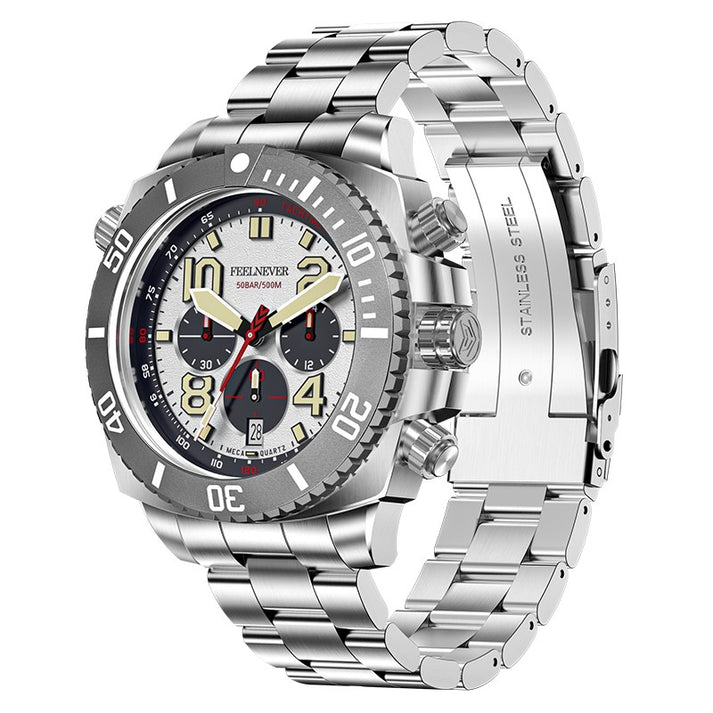
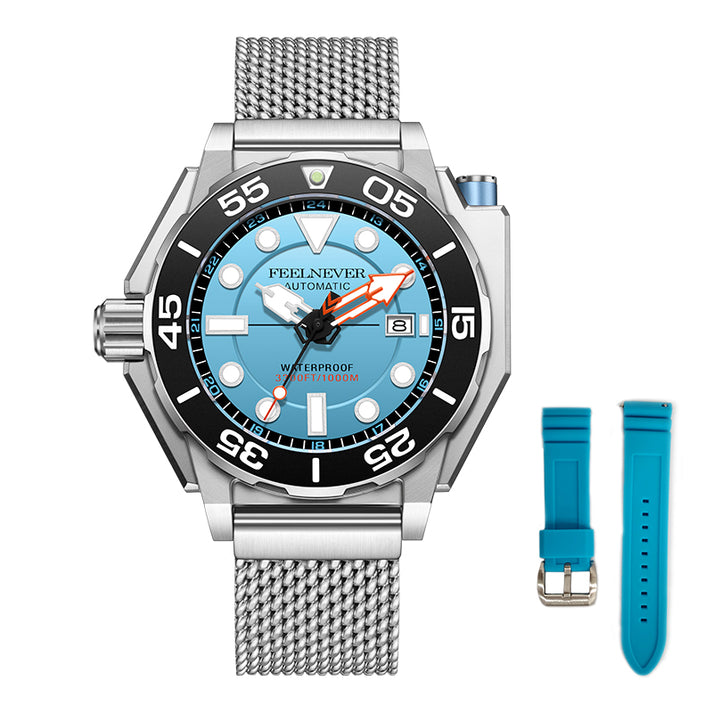
Need even more margin than 300m? For serious ocean and deep-water use, step up to the AbyssForce 500m meca-quartz dive chronograph or the AbyssPro 1000m automatic diver for the highest possible reliability.
🧭Choosing the Right Water Resistance: A Practical Guide
| Water-Resistance Rating | Real-World Meaning | Safe For | Not Safe For | Ideal User | Example Model |
| 50m / 5 ATM / 5 BAR | Protects against everyday moisture and brief immersion | Hand-washing, rain, splashes, shallow swimming. | Diving, snorkeling, ocean swimming, and high-impact water sports. | Everyday users who want basic protection without aquatic activity. | None (your dive lineup starts at 100m). |
| 100m / 10 ATM / 10 BAR | Robust protection for swimmers and travelers. | Swimming, snorkeling, surface water sports, showers (crown secured). | Scuba diving beyond shallow depths. | Active users, swimmers, snorkelers, frequent travelers. | Nami Diver 100m everyday watch |
| 200m / 20 ATM / 20 BAR | Tested to 125% of its rating (≈250m static). Suitable for recreational diving. | Recreational scuba diving (18–30m), snorkeling, heavy pool/ocean use. | Deep professional diving or saturation diving. | Divers, adventure travelers, water-sport users. | AquaMaster 200m dive-ready watch |
| 300m+ / 30 ATM / 30+ BAR | Built for harsh environments, strong currents, and temperature shifts. | Deep diving, cold-water dives, high-impact underwater movement, long-term saltwater exposure. | None within recreational limits; saturation diving may require helium-valve models. | Serious divers, underwater photographers, users who want the highest possible reliability. | TitanPro 300m tool diver |
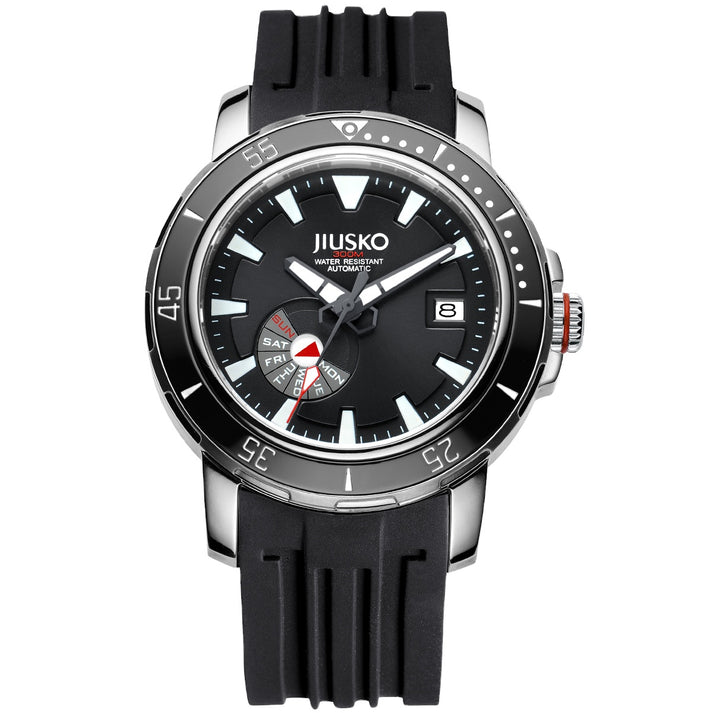
Match your rating to a watch
From everyday 300m to deep-water 1000m — built for real use.
🏁Final Thoughts: Depth Ratings Should Match Your Lifestyle
Selecting the right water-resistance level isn't just a technical choice, it's a practical commitment to how and where your watch will perform. When you understand the real meaning behind 50m, 100m, 200m, and 300m ratings, you're no longer guessing; you're choosing a timepiece engineered for your actual lifestyle. Whether you need everyday reliability, confident swim safety, or professional-grade diving protection, the right rating ensures long-term durability, performance, and peace of mind.
If you're ready to find a watch that matches your specific needs, explore our curated dive watch collection for every water resistance level. This guide helps with that fits your daily routine, your adventures, and your long-term expectations.
Explore all dive watches🔗 Reference this guide
Watch blogs and writers are welcome to cite this explainer. Copy the ready-made citation below.