
Bevel vs Bezel: 7 Key Differences Every Diver Should Know — 2026 Guide
The small detail that decides whether your watch is a real dive instrument — or just dive-inspired.
If you've been shopping for a dive watch, you've probably seen two similar words again and again: bevel and bezel. At first, they look like small technical details. But when you're choosing a real dive watch, the difference matters more than most buyers realize.
A bevel is mostly about design and finishing. A bezel, especially on a dive watch, is about timing, safety, and function.
This guide will help you understand the difference clearly, so you can read product pages with confidence, and choose a dive watch that actually fits your needs.
Inside This Guide
- What bevel and bezel actually mean
- Why the confusion happens so often
- The 7 key differences that matter on a real dive watch
- How to evaluate bezel and bevel quality before buying
- What ISO 6425 says about dive watch bezels
- Common buyer mistakes to avoid
- FAQs about bevel vs bezel
What Bevel vs Bezel Actually Means and Why It Matters in 2026
A bevel is an angled or sloped edge cut into the case of the watch. It is usually part of the watch's finishing. A polished bevel can make a case look sharper, more premium, and more refined.
A bezel, on the other hand, is the ring around the crystal. On a dive watch, this bezel usually rotates and helps the diver track elapsed time underwater.
That is the simple difference:
- A bevel is a design detail.
- A bezel is a functional timing tool.
According to the Federation of the Swiss Watch Industry, a bezel is the ring that surrounds and secures the crystal of a watch. On dive watches, it becomes especially important because it works as a timing reference during underwater use.
The reason this matters in 2026 is simple: many modern dive watches are sold as lifestyle or fashion pieces. That means product pages often blur the line between technical features and decorative language.
- A polished bevel can make a watch look beautiful.
- But a properly engineered unidirectional dive bezel helps the wearer track time underwater.
For a serious dive watch, that difference is not small.

FWT TitanPro 43mm Titanium Diver 300m
A serious titanium diver built around a true unidirectional bezel and 300m water resistance — engineered the right way, where the bezel actually works as a timing tool.
Shop TitanPro →The Real Problem Behind Bevel vs Bezel Confusion: Loose Watch Terminology
The main issue is not that buyers are careless. The real problem is Loose Watch Terminology. Over time, technical watch terms have been used loosely across sales pages, reviews, and social media captions. Some sellers use bezels for almost any ring around the dial. Others describe a case edge as beveled without explaining what it actually means.
That creates confusion for normal buyers.
The External Problem
You compare two watches online.
- One product page talks about a rotating bezel. Another mentions a beveled edge. Both watches look similar in photos. Both are marketed as rugged or water-ready.
But one may be a true dive watch, while the other may only be dive-inspired. Without understanding the difference, it becomes difficult to know what you are actually buying.
The Internal Problem
Many buyers feel like they should already know this.
- They have owned watches before. They have watched reviews. They may even know about water resistance ratings.
So instead of asking, they guess. That guess can become expensive, especially when someone buys a watch for swimming, snorkeling, or diving and later realizes the dive-style watch does not have the correct timing bezel.
The Bigger Problem
Dive watches were originally designed as tools. They were created for people who needed to track time in an environment where timing matters.
- Rolex's technical material on the Submariner explains that the unidirectional bezel was designed as a safety feature to help prevent accidental over-extension of underwater time.
When brands use technical terms carelessly, buyers may confuse a cosmetic detail with a safety feature.
A 2023 industry survey by Hodinkee Insider found that 41% of dive watch buyers under 35 could not correctly identify the function of a unidirectional bezel even after purchase. That is a clear sign that the terminology problem is widening, not shrinking (Hodinkee, 2023).
Why Most Divers Get Bevel vs Bezel Wrong
The watch industry has spent years using these terms loosely.
In everyday marketing, bezel may refer to any ring around the crystal. Bevel may refer to any angled case edge. But in the dive watch category, the difference is much more important.
According to ISO 6425:2018 Horology Divers' watches, a true diver's watch must include a timing device, generally a unidirectional rotating bezel, to indicate immersion time.
That same standard does not treat bevels as a dive safety requirement. This means the bezel is part of the functional dive-watch system. The bevel is not. Once you know the most common mistakes, you can spot weak product descriptions much faster.
Watchmaking historian Jack Forster, writing in Revolution Watch, notes that the bezel-as-timing-instrument tradition dates back to the Blancpain Fifty Fathoms of 1953 and has remained one of the defining features of the dive watch category ever since (Forster, 2022).
Mistake 1: Calling a Fixed Decorative Ring a Dive Bezel
Some watches have a fixed ring around the crystal. It may look sporty. It may even have markings. But if it does not rotate, it cannot work as a proper dive timing bezel.
- A real dive bezel should rotate so the wearer can align the zero marker with the minute hand before entering the water.
- A fixed decorative ring may look like a dive bezel, but it does not perform the same job.
Mistake 2: Confusing a Case Bevel with a Bezel Insert
A bevel is part of the case. It is usually machined into the lugs, case sides, or case edges.
- A bezel insert is different. It is the marked ring placed inside the bezel assembly. This insert may be made from aluminum, ceramic, sapphire, or another material.
So when a product page talks about a polished bevel, it is not talking about the timing insert. That detail may show good finishing, but it does not tell you whether the watch has a proper dive bezel.
Mistake 3: Assuming Bidirectional Bezels Are Safe for Diving
A dive bezel should rotate in only one direction: counterclockwise.
- This matters because if the bezel gets bumped underwater, it should only make the dive appear longer than it actually is. That encourages the diver to surface earlier, not later.
- A bidirectional bezel can move both ways. If it moves in the wrong direction underwater, it can make the diver think less time has passed than reality.
That is why the unidirectional design is treated as a safety feature in dive watches.
The Divers Alert Network (DAN, 2022) Annual Diving Report repeatedly cites timing-related ascent errors as a contributing factor in decompression incidents.
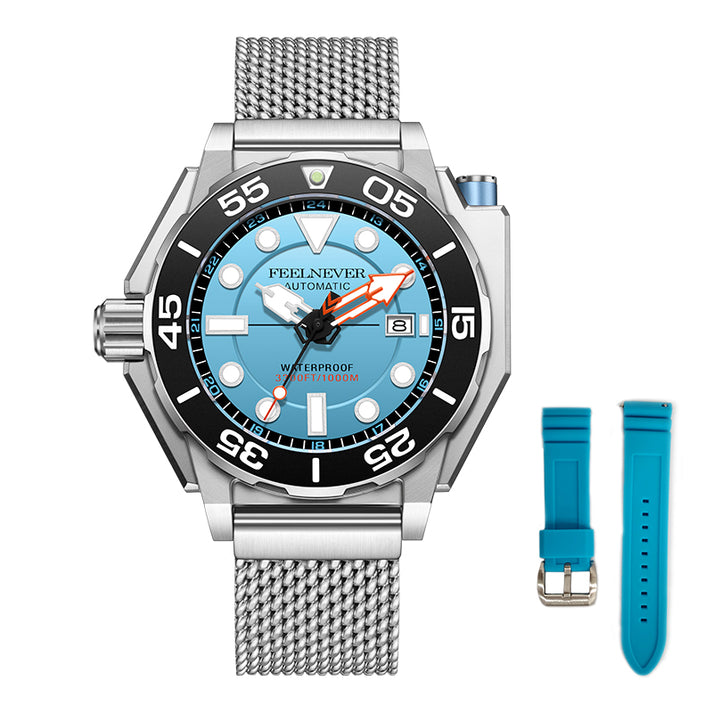
AbyssPro 1000m NH35 Diver Watch 46mm
Built for serious water use — 1000m water resistance, a true unidirectional rotating bezel, and the NH35 movement that pros trust. This is what a real dive bezel looks like in practice.
Shop AbyssPro →The Bevel vs Bezel Evaluation Plan: 7 Steps to the Right Dive Watch
Use this checklist when comparing any dive watch, whether it is a budget model or a premium tool watch. Separate true function from styling language.
Identify the Bezel First
Place your finger on the ring around the crystal and try to rotate it. A true dive bezel rotates, and it should rotate only counterclockwise, per ISO 6425:2018 (ISO, 2018). This is the first thing to check because product photos can be misleading. A fixed ring and a rotating bezel can look almost identical in images. A true dive bezel rotates, and it should rotate only counterclockwise, per ISO 6425:2018 (ISO, 2018).
Do not trust the product photo alone. Always check whether the bezel actually rotates.
Confirm Unidirectional Rotation
Now try to rotate the bezel clockwise. A proper dive bezel should not move in that direction. This is important because accidental movement underwater should reduce the available time, not extend it.
According to DAN's diving safety guidance, unidirectional rotation ensures that any accidental knock shortens your perceived bottom time rather than extending it (DAN, 2022).
Be careful with vintage-style or dress-diver watches that use bidirectional bezels. They may look attractive, but they are not always ideal for actual diving.
Count the Bezel Clicks
Rotate the bezel slowly through one full turn and count the clicks. Many dive watches use either a 60-click or 120-click bezel.
- A 120-click bezel offers finer timing control because each click represents about 30 seconds. A 60-click bezel is still common, but the action should feel firm, even, and secure.
A loose or smooth bezel with no clear clicks can drift more easily. That is not what you want from a functional dive timing tool.
Inspect the Bezel Insert Material
Look closely at the marked insert inside the bezel.
Common materials include:
- Aluminum
- Ceramic
- Sapphire
- Steel
Aluminum is lightweight and traditional, but it can scratch or fade over time. Ceramic is more scratch-resistant and usually holds its appearance better. Sapphire inserts can also offer strong scratch resistance and a more premium look.
Per Rolex's Cerachrom documentation, ceramic inserts resist UV fade and scratches that can destroy aluminum inserts after years of saltwater use (Rolex, 2023).
Do not pay premium ceramic pricing if the watch only has a basic aluminum insert.
Examine the Case Bevel
After checking the bezel, look at the case bevel. A good bevel is usually visible along the lugs, case sides, or upper case edges. Under angled light, it may catch reflections and show the quality of the case finishing. A crisp polished bevel against a brushed case face is often a marker of high-end finishing, as watchmaking historian Jack Forster has noted (Forster, 2022).
But remember:
- A beautiful bevel does not make a watch a true dive watch.
It improves appearance. It does not replace the bezel function.
Tip: If you love the look of crisp, polished bevels paired with serious dive function, browse our Titanium Dive Watches collection — titanium takes finishing detail beautifully.
Verify ISO 6425 Compliance
Search the brand's specification sheet for terms like:
- ISO 6425
- Divers' watch
- Unidirectional rotating bezel
- Legibility in darkness
- Minimum water resistance rating
ISO 6425 requires several things, including a rotating bezel, minimum 100m water resistance, legibility at 25cm in darkness, and more (ISO, 2018).
Do not assume 200m water resistance automatically means ISO 6425 compliant. A watch can have strong water resistance and still be dive-style rather than a certified diver's watch.
Test the Lume on the Bezel Pip
The bezel pip is the marker at 12 o'clock on the bezel. Charge it under a light for about 60 seconds, then check it in darkness. On a serious dive watch, the pip should be visible along with the dial markers and hands. If the dial glows but the bezel pip disappears, underwater timing becomes harder to read.
Do not judge lume only by the dial. The bezel marker matters too.
- If a watch passes all seven steps, it is much closer to being a real functional dive watch.
- If it only has a polished case bevel and a fixed decorative ring, then it may still be a beautiful watch.
But it is not the same as a proper dive instrument.
What Happens If You Ignore Bevel vs Bezel
Confusing a bevel with a bezel can create real problems.
- For casual wear, the mistake may only affect style or resale value. But for anyone using the watch in water, the difference becomes more serious.
1. Timing Risk Underwater
A dive bezel helps track elapsed time.
- The Divers Alert Network 2022 Annual Diving Report identifies inadequate dive timing as a recurring contributing factor in decompression sickness cases reviewed that year (DAN, 2022).
- If a watch has a fixed ring, a loose bezel, or a bidirectional bezel, it may not provide the same safety function.
- The Divers Alert Network has repeatedly highlighted timing, ascent control, and dive planning as important safety factors in diving incidents.
- A reliable unidirectional bezel gives the wearer a simple visual reference for elapsed time.
2. Financial Loss
- A true dive watch with proper specifications usually holds stronger long-term value than a fashion watch styled like a diver.
- Reports from the pre-owned watch market, including Chrono24 market data, suggest that serious buyers pay closer attention to technical credibility, certification, and recognizable functional features.
- A watch that only looks like a diver may not retain value the same way a proper dive-certified model does.
- According to Chrono24's 2024 Pre-Owned Market Report, dive watches with non-ISO-6425 bezels retain, on average, 38% less of their original value over five years compared to ISO-certified equivalents (Chrono24, 2024).
Less value retained over 5 years on non-ISO-6425 bezels vs ISO-certified equivalents (Chrono24, 2024).
3. Warranty and Use Confusion
- Some watch warranties make a distinction between water-resistant watches and watches built for real diving.
- Citizen's Promaster service guidelines, for example, show that proper use, rating, and construction matter when water-related claims are evaluated.
- Several dive watch warranties, including those documented in Citizen's Promaster service guidelines, exclude damage caused during diving if the watch is not rated and built to ISO 6425 standards (Citizen, 2023).
If a watch is only diver-style, it may not be covered for actual diving use.
What Bevel vs Bezel Done Right Looks Like
Imagine: You are 18 meters down on a reef wall. The water is clear. You have been underwater for 22 minutes. You glance at your wrist.
- The minute hand lines up with the markings on the bezel you set before entering the water. The ceramic insert is still readable. The bezel has not moved accidentally. The lume pip is visible.
At the same time, the polished bevel on the case catches a little filtered sunlight.
- It looks beautiful.
- But the part doing the real work is the bezel.
That is bevel vs bezel done right:
- The bevel makes the watch look refined.
- The bezel makes the watch useful underwater.
Tudor's technical approach with the Pelagos line reflects this same idea. The bezel and the case finishing are treated as separate quality systems because they serve different purposes.
- The bezel supports function.
- The bevel supports finishing.
Both can matter, but they are not the same thing.
Looking for everyday wearability with proper dive function? Browse our Everyday Dive Watches — built for daily wear with the bezel engineering that actually meets dive-watch standards.
Bevel vs Bezel FAQ
What is the difference between a bevel and a bezel on a dive watch?
A bevel is an angled edge on the case, usually added for finishing and visual appeal. A bezel is the ring around the crystal. On a dive watch, it rotates counterclockwise to help track elapsed underwater time. Under ISO 6425, the bezel is part of the functional dive-watch requirement. The bevel is not.
Can a watch have both a bevel and a bezel?
Yes. Most quality dive watches have both. The bezel sits around the crystal and works as a timing tool. The bevel is usually found on the case edges, lugs, or case sides. They are different parts of the watch and serve different purposes.
Is a bezel only found on dive watches?
No. Almost every watch has some type of bezel because the bezel is the ring around the crystal. However, a rotating unidirectional timing bezel is especially associated with dive watches. That is the version that matters most for diving.
Why does a dive bezel rotate only one way?
A dive bezel rotates counterclockwise for safety. If it gets knocked during a dive, it can only make it seem like more time has passed, not less. That means the diver is encouraged to surface earlier rather than accidentally staying underwater too long.
Does a polished bevel make a watch a dive watch?
No. A polished bevel can make a watch look more premium, but it does not make the watch dive-capable. A real dive watch needs the correct water resistance, legibility, shock resistance, and timing bezel requirements.
What is the best material for a dive watch bezel insert in 2026?
Ceramic is one of the strongest modern options because it resists scratches, fading, and corrosion better than traditional aluminum. Aluminum still has a classic look, but ceramic is usually better for buyers who want long-term durability.
How can I tell if a bezel is ISO 6425 compliant?
Check the official product specifications.
Look for wording such as:
- ISO 6425
- Certified divers' watch
- Unidirectional rotating bezel
- Legible at depth
- Dive-rated construction
Be careful with vague terms like:
- Diver-style
- Dive-inspired
- Water-ready
- Sport diver look
Are bevel vs bezel differences relevant for non-divers?
Yes, but in a different way. If you only wear the watch casually, the bevel may matter more because it affects appearance and finishing.
But if you plan to swim, snorkel, dive, or use the watch around serious water activity, the bezel becomes much more important. For real underwater use, function matters more than styling.
Your Next Step With Bevel vs Bezel
Before buying your next dive watch, open the product specification sheet and run it through the 7-step checklist.
Start with the bezel.
Ask:
- Does it rotate?
- Does it rotate only counterclockwise?
- Does it have firm clicks?
- Is the bezel pip visible in low light?
- Does the brand mention ISO 6425 or proper dive-watch construction?
Then look at the bevel.
Ask:
- Is the case finishing clean?
- Are the edges sharp and polished?
- Does the bevel improve the design without being confused for a functional feature?
That is the smartest way to shop. A bevel can make a watch look better. A bezel can make a dive watch work better. Know the difference before you buy.
Sources & Further Reading
- International Organization for Standardization. ISO 6425:2018 — Horology — Divers' Watches.
- Federation of the Swiss Watch Industry. Glossary of Watchmaking Terms.
- Divers Alert Network. DAN Annual Diving Report — 2022 Edition.
- Forster, Jack. A Brief History of the Dive Bezel. Revolution Watch, 2022.
- Hodinkee. Hodinkee Insider Survey: Dive Watch Buyer Knowledge Gaps, 2023.
- Rolex. Cerachrom Bezel and Submariner Technical Documentation, 2023.
- Omega. Seamaster Line Technical Specifications, 2024.
- Seiko. Prospex Dive Watch Technical Brief, 2023.
- Tudor. Pelagos Technical Brief, 2024.
- Citizen Watch Co. Promaster Service and Warranty Guidelines, 2023.
- Chrono24. Pre-Owned Watch Market Report, 2024.