
200m vs 300m Water Resistance: Choose the Best Depth Rating Dive Watch
Which rating actually matches your life — not just the bigger number on the dial.
200m vs 300m Water Resistance: Choose the best depth rating dive watch
Most buyers do not need more water resistance. They need the right depth rating. That is why the real question in 200m vs 300m water resistance is which rating actually matches your life. A 200m-rated automatic diver can already give you a screw-down crown, sapphire crystal, and strong swimming-and-snorkeling confidence, while a 300m titanium diver can add more headroom and a lighter daily feel at the same time. In a market where Swiss watch exports fell 1.7% in value in 2025 and unit volume dropped 4.8%, buyers are clearly becoming more selective about practical value, not just bigger specs.

The short answer is simple: 200m is enough for most non-divers, while 300m matters more if you want extra safety margin, stronger dive-watch positioning, or a more premium daily-use build. A useful real-world reference is recreational diving depth itself. Open Water diver training is commonly limited to 18 meters, while more advanced recreational training often goes to around 30 meters. That does not mean depth ratings translate directly to actual dive depth, but it does show how much headroom both 200m and 300m already provide for normal swimming, snorkeling, and recreational water use.
🌊What 200m water resistance really means
A 200m dive watch is already a serious water-ready watch. A VantaDive 200M Sport Diver, in this category combines 200m water resistance, a Seiko NH35 automatic movement, sapphire crystal, a 316L stainless steel case, and a screw-down crown. That is not entry-level splash protection. It is a full recreational-use spec that covers the kind of water exposure most owners actually care about, especially when the crown is secured properly before water use.
For most buyers, 200m already covers the activities that matter most:
- swimming
- snorkeling
- beach holidays
- boating
- travel
- daily wear around water
That is why 200m remains such a strong sweet spot. It offers serious real-life utility without automatically pushing the watch into a larger, thicker, or more expensive category.
⚓What 300m water resistance really means
A 300m dive watch adds more than just another number on the dial. A TitanPro 43mm Titanium Diver 300M in this category pairs 300M water resistance with a 43mm titanium case, Seiko NH36 automatic movement, and sapphire crystal. That combination matters because it gives you a stronger water-resistance class without forcing you into a very heavy case. In practical terms, 300m often feels less like more depth and more like more confidence.
For buyers, 300m usually brings a few extra advantages:
- more water-resistance margin
- stronger diver identity
- better peace of mind for frequent water use
- a more premium materials story, especially with titanium
- a clearer office-to-ocean one-watch appeal
That is why 300m can matter even for non-divers. It is often about comfort and confidence, not only deeper water.
⚖️Side-by-side comparison: 200m vs 300m water resistance
The comparison is to look at what each level tends to offer in real life.
🌊 200m
- Serious recreational water use
- Swimming, snorkeling, sports, travel
- Screw-down crown, sapphire, sport-diver setup
- Everyday sport diver
⚓ 300m
- Stronger dive-focused water confidence
- Swimming, snorkeling, recreational diving, heavier marine use
- Stronger diver positioning, lighter premium materials or more headroom
- Titanium everyday tool diver
| Category | 200m / 20 BAR | 300m / 30 BAR |
|---|---|---|
| Typical meaning | serious recreational water use | stronger dive-focused water confidence |
| Good for | swimming, snorkeling, sports, travel | swimming, snorkeling, recreational diving, heavier marine use |
| Common build signs | screw-down crown, sapphire, sport-diver setup | stronger diver positioning, often lighter premium materials or more headroom |
| Example profile | everyday sport diver | titanium everyday tool diver |
Recreational dive depths vs the watch ratings — both leave huge margin.
🤔Does 300m matter for non-divers?
Yes, but not always in the way people assume. A non-diver does not need 300m for handwashing, pool use, or casual swimming. For those jobs, 200m is already more than enough. But 300m can still matter if you want a lighter case material, more recreational-dive readiness, or simply a watch that feels more overbuilt for long-term use around water. A 43mm titanium 300m diver and a 200m steel sport diver do not only differ in rating. They differ in wearing experience too.
A useful way to think about it is this:
- choose 200m if your life is mostly pool use, snorkeling, travel, and everyday wear
- choose 300m if you want extra margin, lighter titanium comfort, or a stronger tool-watch feel
That is a much more helpful answer than pretending every non-diver should always choose the lower rating.
🔍Myth-busting: the most common mistakes
The biggest myth is that 200m is somehow basic. It is not. A 200m diver with sapphire crystal and a screw-down crown is already a serious water-use watch. Another common myth is that 300m means you can actually dive to 300 meters. In reality, those numbers are pressure-test ratings, and real performance still depends on crown security, seals, age, and proper care. The deeper recreational-training references above also show how much headroom even 200m already provides compared with normal sport-diving depths.
One more mistake is assuming the rating alone decides everything. It does not. A better buying decision always includes:
- case material
- case size
- crystal
- crown design
- your real use
A comfortable watch with the right rating usually delivers more value than a more extreme watch that never feels right on the wrist.
🎯Who should buy 200m vs 300m?
Choose 200m if you want a balanced everyday diver with automatic movement, sapphire crystal, and enough water resistance for swimming, snorkeling, holidays, and general active wear. That type of watch works especially well if your priority is everyday practicality and strong value without overbuying spec.
Choose 300m if you want a more premium-feeling diver with added margin and better long-day comfort, especially if the watch also gives you a lighter titanium case and a cleaner office-plus-water personality. That kind of watch makes more sense when you want one piece that can move between daily wear and stronger aquatic use with fewer compromises.
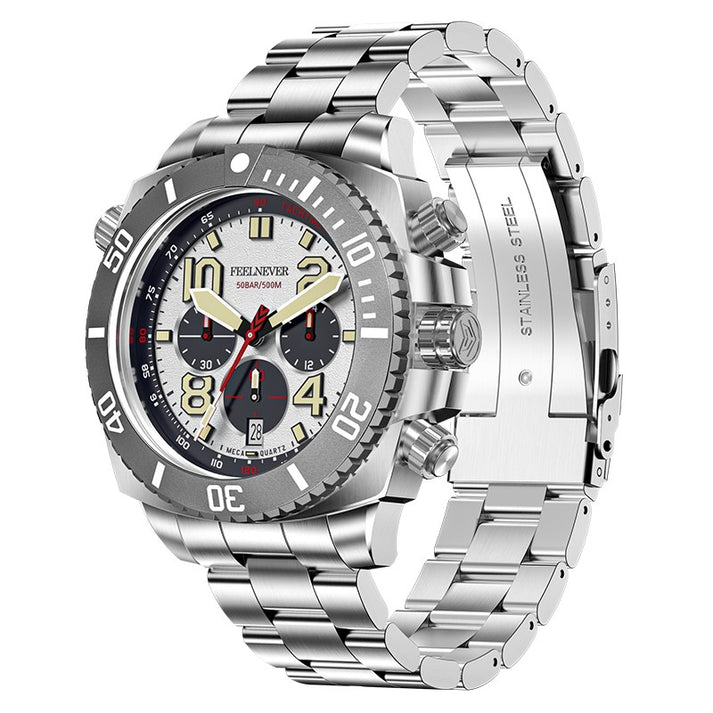
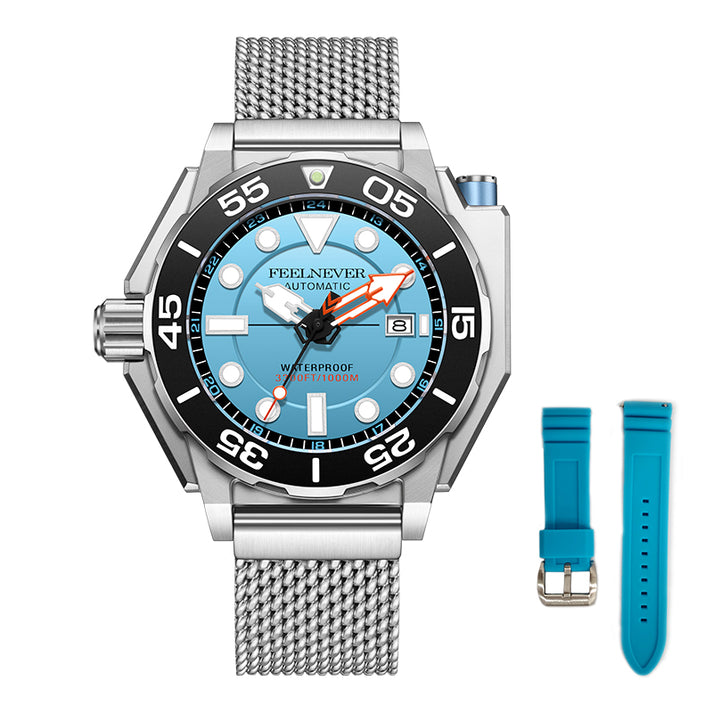
And if your real life pushes past recreational limits — heavy marine use, frequent saltwater, or simply wanting maximum overbuild — it is worth looking beyond 300m. The AbyssForce 500M meca-quartz dive chronograph and the AbyssPro 1000M automatic diver step the margin up to 50 and 100 BAR for buyers who want the strongest possible headroom.
200m, 300m… or more
Pick the rating that matches your life — here's the range.
🏁Wrapping Up: Browse dive watch as per your need
So, in 200m vs 300m water resistance, the better answer is not that one rating wins for everyone. The better answer is that 200m is enough for most buyers, while 300m is better for people who want extra margin, lighter premium wear, or a stronger diver identity. If your real life is swimming, snorkeling, travel, and daily use, start with a strong 200m-rated sport diver. If you want extra confidence and a more refined one-watch solution, move to a 300m-rated titanium diver. That is the smarter way to choose a rating that matches your life instead of just chasing the bigger number.
Both ratings are easy to find on a budget — see the best dive watches for the money at each depth.
🔗 Reference this guide
Watch blogs and writers are welcome to cite this comparison. Copy the ready-made citation below.
Loading citation…