
Can You Swim or Shower With a 50m Water-Resistant Watch?
The truth behind a rating that confuses millions — verified across 20+ official brand manuals.
Introduction: Why 50m Water Resistant Doesn't Mean What Most People Think
Can you swim or shower with a 50m watch?: is one of the most searched and most misunderstood questions in the watch world. The confusion comes from a simple but critical gap: water-resistance ratings are measured under controlled lab pressure, not real-world activities.
A hot shower, soap, steam, or a sudden arm movement in a pool can expose a watch to stresses that exceed what the rating alone suggests. That's why: some brands allow showering or swimming at 5 ATM, while others explicitly warn against it, even at the same depth rating.
This guide cuts through the detailed and comprehensive depth of official brand manuals, support pages, and warranty language. Instead of general advice: you'll see what manufacturers actually permit, what they warn against, and how buyers should interpret a 50m rating before using a watch near water.
Want a watch you never second-guess around water? The top dive watches under $200 are all rated 200m or deeper.
15-Second Verdict (Shower/Swim/Splashes): 50m Watches
If you're the one who wants a simple answers to these three everyday questions when it comes to a 50m watch, so this guide is for you

- Can I shower with a 50m watch?
- Can I swim with it?
- Are rain and splashes okay?
Here,
1) Can You Shower With a 50m Watch?
Usually no, unless the brand explicitly says showering or bathing is allowed. This surprises many buyers. A 50m rating sounds safe, but most manufacturers are cautious about showers.
Why Do Brands Often Say No?
Across manuals and support pages, the same risks appear again and again:
- Hot water and steam can cause seals to expand and weaken
- Soap and shampoo speed up gasket deterioration
- Crowns and seals are the most common points where water enters
Because of this, many brands allow swimming but still warn against showers.
- Only shower if the brand guide clearly allows it
- Make sure the crown is fully pushed or screwed down
- Keep buttons untouched during water exposure
- Hot showers or steam rooms
- Soap, shampoo, or body wash contact
- Pressing pushers under water
More reliable: 10 bar / 100m with a screw-down crown
2) Can You Swim With a 50m Watch?
Yes, but only if the brand explicitly allows swimming at that rating. Otherwise, treat it as it depends. This is where most confusion happens. At 5 bar / 50m, brand positions are split almost evenly between:
- OK for ordinary swimming
- Not recommended for swimming
- Check the official brand chart or manual
- Limit use to calm pool swimming, not impact activities
- Snorkeling or diving
- Water sports or wave impact
- Jumping into water impact pressure exceeds test conditions
Frequent or ocean use: 10 bar / 100m + screw-down crown
3) Are Rain and Splashes Okay?
Yes. Almost all brands agree on this. Watches rated 3 bar / 30m or higher are generally fine for:
- Rain
- Hand washing
- Accidental splashes
What this does not mean:
- Not for bathing
- Not for showering
- Not for swimming
Anything more requires explicit brand permission
What 50m Really Means: Brand Comparison Table
Shower = NO if the brand warns about heat, steam, soap, or bathing
Swim = YES only if swimming is clearly allowed
| # | Brand | Official Guidance | Shower | Swim |
|---|---|---|---|---|
| 1 | Timex | 50m: swimming, not snorkeling. | Depends | Yes |
| 2 | Shinola | Bathing is OK; swimming is not recommended. | Yes | No |
| 3 | Bulova | 50m: swimming; not diving/snorkeling. | Depends | Yes |
| 4 | Citizen | 5 bar: ordinary swimming; warns against hot water. | No | Yes |
| 5 | Seiko | 5 bar: suitable for sports such as swimming. | Depends | Yes |
| 6 | Orient | Remove when showering; soap damages gaskets. | No | Yes |
| 7 | Casio | 5 bar: showering yes; swimming no. | Yes | No |
| 8 | Fossil | Not for swimming or bathing. | No | No |
| 9 | Apple Watch | Suitable for shallow-water swimming. | Depends | Yes |
| 10 | Fitbit | Shower is possible; soap may cause damage. | No | Depends |
| 11 | Samsung | Not for swimming pools or sea water. | Depends | No |
| 12 | Garmin | 5 ATM: showering, swimming, snorkeling. | Yes | Yes |
| 13 | TAG Heuer | 5 ATM: showering and swimming allowed. | Yes | Yes |
| 14 | Longines | 5 bar: shallow-water swimming. | Depends | Yes |
| 15 | Certina | 50m: showering; 100m for swimming. | Yes | Depends |
| 16 | Breitling | 5 bars: showering and swimming. | Yes | Yes |
| 17 | IWC | 3–5 bars: can be worn while swimming. | Depends | Yes |
| 18 | Tissot | 10 bars: swimming and snorkeling. | Depends | Yes |
| 19 | Montblanc | 5 ATM: shallow-water swimming. | Depends | Yes |
| 20 | Invicta | Strong crown and pusher warnings. | Depends | Depends |

TitanPro 43mm Titanium Diver 300m
One watch you never need to baby. Titanium build, 300m water resistance, and a screw-down crown — the easy answer to every shower, pool, and ocean question above.
- 300m / 30 ATM water resistance
- Screw-down crown for hermetic seal
- Corrosion-resistant titanium case
- Safe for swimming, snorkeling, daily wear
Brands vs Myths Library: Make Your Doubts Clear

Understanding How Different Brands Handle Water: Showering & Swimming
Not all 50m watches are created equal. Beyond the rating itself, the brand type often tells you what your watch is actually designed for and where caution is required. People mostly want to know:
- Can I shower with it?
- Can I swim with it?
1. Fashion Brands: Style Over Water
What they focus on: Looking good and mass-market appeal, not actual water adventures.
What Brands Claims:
- Many include warranty disclaimers like: Water damage not covered even if the watch has a water-resistance rating.
- Specific instructions often warn against showering or swimming at low ratings like 3 ATM.
Key Points To Ponder
- Shower: Usually NO if the brand warns against water contact.
- Swim: Conditional, only if the brand explicitly says swimming is allowed.
| Brand | Typical Wording | Shower | Swim | Notes |
|---|---|---|---|---|
| Fossil | Water damage unless marked water-resistant. | Conditional | Conditional | Warranty risk if exposed to water |
| MVMT | The warranty does not cover water damage. | Conditional | Conditional | Warranty risk |
| Daniel Wellington (3ATM) | Avoid all contact with water… showering, bathing, swimming. | NO | NO | Not recommended |
2. Sport Brands: Practical & Functional Based
What they focus on: Clear do's and don'ts for everyday and sports use.
What Brands Say:
- Button/crown rules: Do not operate buttons/crowns while wet.
- Rating charts: 30m/50m/100m/200m specify what's allowed.
- Rinse-after-seawater guidance is common.
Key Points To Ponder:
- Shower: Often not recommended if baths, sauna, or soap are mentioned.
- Swim: OK if the brand chart specifically allows it, usually at 50m / 5 ATM or higher.
| Brand | Typical Wording | Shower | Swim | Notes |
|---|---|---|---|---|
| Casio | Avoid baths, saunas, soaps; do not operate crown/buttons wet. | Not Recommended | Conditional | Shower risk; swimming OK if chart allows |
| Timex | Official rating chart shows 50m = light swimming | Conditional | OK | Swimming allowed; shower risk depends on model |
3. Diver / Tool Brands: Sealing & Maintenance
What they focus on: Proper sealing, crown discipline, and real-world maintenance.
What Brands Say:
- The crown must be screwed down to maintain water resistance.
- Water resistance isn't permanent: gaskets age, shocks deform parts.
- Avoid hot baths/saunas/steam.
Key Points To Ponder:
- Shower: Often NO because of steam/soap/hot water warnings.
- Swim: Usually OK if the crown is properly secured and the watch rating supports it.
| Brand | Typical Wording | Shower | Swim | Notes |
|---|---|---|---|---|
| Rolex | The crown must be screwed down tightly. | Conditional | Conditional | Warranty risk depends on model/rating |
| Seiko | Water resistance is not permanent; gaskets age; shocks deform parts. | Conditional | Conditional | Needs maintenance/testing |
| Grand Seiko | Do not wear it in the bath/sauna; steam/soap accelerates deterioration. | NO | Conditional | Shower not recommended |
4. Microbrands: Responsibility & Strict Rules
What they focus on: Clear user responsibility, crown rules, and strict warranty conditions.
What Brands Say:
- Warranty void if screw-down crown left open.
- Water resistance often depends on correct crown behavior.
Key Points To Ponder:
- Shower: Usually Conditional, depends on rating and proper crown use.
- Swim: Often OK only if explicitly allowed and the crown is properly sealed.
| Brand | Typical Wording | Shower | Swim | Notes |
|---|---|---|---|---|
| Vaer | If the screw-down crown left open during water exposure, warranty voided. | Conditional | Conditional | Shower depends on behavior |
| Vaer (care page) | The crown must be screwed and sealed during water exposure. | Conditional | Conditional | Swim allowed if crown closed |
2026 Watch Water-Risk Score Calculator
Assessing Real-World Water Risk for Your Watch
Why This Calculator Matters
Most watches come with water-resistance ratings, but real-life conditions rarely match lab tests. Pressure ratings assume a stationary watch in calm water, yet in everyday use, factors like:
- Hot showers or saunas,
- High-impact swimming or water sports,
- Operating pushers or crowns underwater,
- Aging seals or crowns,
These can all weaken seals and compromise water resistance, sometimes without any visible warning.
This is where our Water-Risk Score Calculator comes in: Each risk factor is assigned a point value based on its potential to damage your watch:
| Factor | Points | Description |
|---|---|---|
| Heat Exposure (hot shower, sauna, steam) | +3 | Heat, steam, and soap accelerate seal degradation. |
| Impact or Water Sports (diving, jet ski, swimming, rough surf) | +3 | Dynamic water pressure can exceed static test limits. |
| Used Pushers or Buttons in Water | +3 | Operating buttons underwater can bypass seals and allow water ingress. |
| Crown Type: Push/Pull vs Screw-Down | +2 | Screw-down crowns provide a more secure seal; push/pull crowns are more vulnerable. |
| No Recent Pressure Test or Unknown Service History | +2 | Aging gaskets lose elasticity; without regular testing, resistance is uncertain. |
Total Score – Verdict:
| Score | Verdict | Recommended Action |
|---|---|---|
| 0–2 | GREEN – Low Risk | Safe for normal swimming/splashing. Keep the crown secured and rinse after saltwater exposure. |
| 3–6 | YELLOW – Caution | Avoid hot showers and impacts. Schedule a pressure test before regular swimming. |
| 7+ | RED – High Risk | Stop all water exposure until the watch is pressure-tested and gaskets inspected. Especially critical if pushers/buttons were used underwater or exposed to heat + impact. |
For Instance: Imagine your watch was worn in a hot shower (+3), has a push/pull crown (+2), and hasn't been pressure tested (+2):
3 + 2 + 2 = 7 → RED (High Risk)
The calculator turns everyday usage into a simple, actionable score, so you can protect your watch before water damage occurs.
Why These Factors Matter
Heat Exposure (Hot Shower / Sauna / Steam)
- Mechanism: Heat expands and softens seals, while soap or chemicals accelerate deterioration.
- Official guidance: Do not wear the watch while taking a bath or a sauna. Steam, soap may accelerate the deterioration of water resistant performance.— Grand Seiko
Impact / Water Sports
- Mechanism: Sudden impacts create pressure spikes beyond static lab tests.
- Official guidance: Water resistance levels are based on the maximum pressure tolerance of a motionless watch in still water.— Breitling
Pushers / Buttons Used in Water
- Mechanism: Pressing pushers underwater can breach seals, causing fogging or water ingress.
- Official guidance: Do not operate the crown or buttons while your watch is submerged or wet.— Casio
Crown Type: Push/Pull vs Screw-Down
- Mechanism: Screw-down crowns create a hermetic seal, reducing accidental loosening.
- Official guidance: To maintain waterproofness, the winding crown has to be screwed down tightly to create a hermetic seal.— Rolex
No Recent Pressure Test / Unknown Service History
- Mechanism: Seals age, lose elasticity, or deform over time; untested watches may not maintain their rated resistance.
- Official guidance: A watch's water resistance is not permanently guaranteed… affected by the ageing of gaskets… We recommend regular checks. — Seiko (US)
Shower & Water Exposure Decision Guide
Even if your watch is labeled water-resistant, real-world exposure can stress seals and compromise performance. Across multiple official manuals and service pages, watch brands consistently highlight the same risks:

- Hot water / steam / showers / saunas accelerate seal deterioration.
- Soap, shampoo, and detergents reduce water resistance and may cause fogging or ingress.
- Operating crowns or pushers while wet is a high-risk entry path.
- Aging seals or unknown service history can make a previously safe watch vulnerable.
This guide clears those warnings into simple decision paths, helping you know when it's safe and when it's not.
Brand-Proven Rules
| Risk Factor | Notes / Brand References |
|---|---|
| Hot water / steam | Avoid baths, saunas, or showers. (Grand Seiko, Seiko US, Casio, Orient) |
| Soap / detergent | Accelerates gasket deterioration; avoid contact. (Grand Seiko, Seiko US, Orient, Casio) |
| Operating crown/pushers wet | Never operate underwater; can compromise seals. (Casio, Orient, Rolex) |
| Seal condition / service history | Gaskets age and deform; check regularly. (Seiko, Citizen) |
Decision Paths: If X → Then Y
Path 1: Hot / Steamy Shower
Verdict: NO (even on 50m / 5ATM watches)
Why: Brands explicitly warn that heat, steam, and soap accelerate seal deterioration. This includes showers, baths, saunas, and hot tubs.
Rules:
- If you take hot showers, remove the watch.
- If the shower includes soap/shampoo/steam: risk increases; remove it.
- If seals are old / service history unknown: treat as NO.
- Wear the watch after the shower.
- Store dry; clean gently with fresh water and soft cloth.
- Never rely on it as it survived last time, performance changes as seals age.
Path 2: Cool Quick Rinse
Verdict: CONDITIONAL only if all criteria are met.
Checklist:
- Water is cool or lukewarm, no steam.
- No soap, shampoo, or detergent contact.
- Crown fully pushed in or screwed down.
- No buttons/pushers pressed while wet.
- Prefer still or gentle water, not strong jets.
- Service history known; seals checked recently.
Rules:
- If rinsing briefly and carefully, then it's okay, and dry immediately.
- If seals/service history is unknown, then treat as NO and have a water-resistance test.
- Dry with soft cloth.
- Schedule periodic water-resistance checks: yearly or more often if frequent exposure.
Path 3: Splashes Only: hand wash, rain, accidental water contact
Verdict: OK
Rules:
- Crown secured; don't operate pushers/crowns while wet.
- Soap/detergent exposure, then rinse immediately with fresh water and dry.
- Keep the crown pushed in a screw.
- Wipe dry after exposure.
- Pull crown out or press pushers while wet.
Want a watch that handles every path above?
Browse our Everyday Dive Watches — built for daily wear with the water-ready specs that pass every checklist on this page.
Buyer's Upgrade Map: Choose the Right Watch for Water Use
Now a question arises, Can I get it wet? into actionable buying decisions. Now look at:

- Minimum specifications for safe use
- Why these specs matter (brand-backed proof)
- Recommended purchases
- What to avoid
The goal is simple: protect your investment, enjoy water confidently, and avoid guesswork.
Path A: Shower / Swim Anytime
Use Case: Daily swimming, showers, snorkeling, frequent water exposure.
Minimum Specs:
- Water Resistance: 100m / 10 bar or higher
- Crown: Secure system, ideally screw-down
- Pushers: Avoid operating in water
- Maintenance: Regular pressure testing if frequently exposed to water
Why These Specs Matter:
- Tissot: 10 bar (100 m) = safe for showering and swimming
- Rolex: Screw-down crown creates a hermetic seal to prevent leaks
- TAG Heuer: Test WR every 2 years; gaskets age and corrode over time
- Seiko: Water resistance is not permanent; gaskets age, shocks can deform parts
- VantaDive 200M: 20 bar and screw-down crown; safe for swimming, snorkeling, and daily water use
- For ultimate peace of mind: 500m+ professional dive watches for maximum durability
- Splash-only watches or models without clear swim approval
- Watches where you might operate pushers or crowns underwater for example Hamilton warning.
Path B: Occasional Pool Use
Use Case: Light swimming in pools, infrequent water exposure
Minimum Specs:
- Water Resistance: 50m / 5 ATM, only if the brand explicitly permits swimming
- Prefer 100m / 10 bar if the brand is vague, the watch is older, or you jump/dives into water
- Aftercare: Rinse after chlorine, dry thoroughly
- Crown / Pushers: Fully secured; avoid use underwater
Why These Specs Matter:
- Casio: 50m is suitable for shallow pool swimming; 100m allows light snorkeling/poolside diving
- Hamilton: Rinse after chlorine, secure crown, do not operate pushers underwater
- VantaDive 200M: Clear swim approval + screw-down crown; safe and worry-free for pool days.
- Splash-resistant-only watches
- Older watches with unknown service history. Seiko: water resistance may degrade over time.
Path C: Water Sports / High-Impact Water
Use Case: Jet skiing, surfing, diving, hard swimming, impact water activities
Minimum Specs:
- Water Resistance: 200m / 20 bar or higher
- Crown: Secure system, ideally screw-down
- Pushers: Avoid using in water
- Maintenance: Regular pressure testing
Why These Specs Matter:
- Casio: 200m is required for high-impact activities like jet skiing
- Tissot: 20–30 bar = suitable for snorkeling, scuba diving, and high-demand water use
- AbyssForce 500M: Professional 500-meter rating for extreme water conditions
- AbyssCore 500M: Explicitly lists water sports as safe
- AbyssPro 1000M: 100 ATM; ideal for swimming, surfing, diving, and boating
- 100m watches for high-impact water activities.
- Any watch you might operate with wet hands.
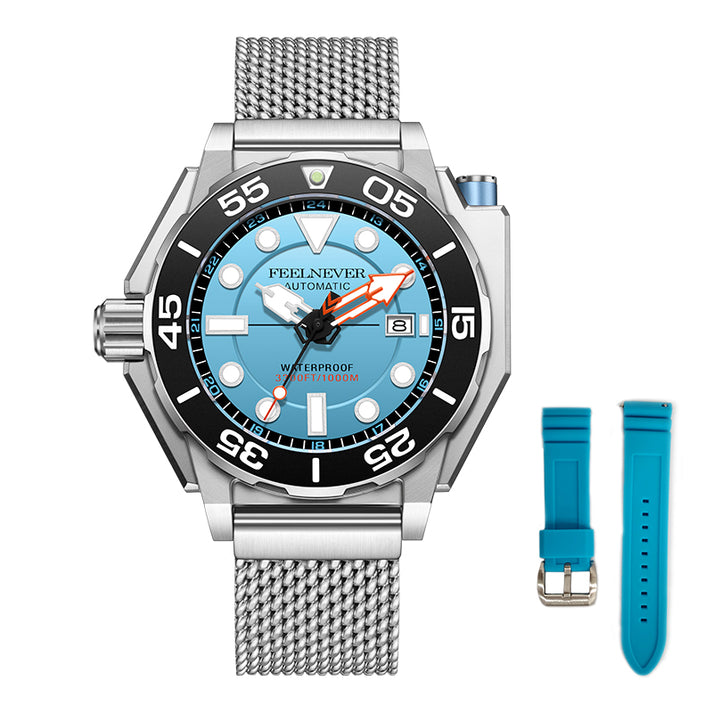
AbyssPro 1000m NH35 Diver 46mm
Made for the deep end. 100 ATM water resistance puts swimming, surfing, diving, and boating well within reach — without ever second-guessing your watch.
- 1000m / 100 ATM professional rating
- NH35 automatic movement
- 46mm case for serious wrist presence
- Built for water sports & high-impact use
| Use Case | Minimum Specs | Brand-Backed Proof | Key Reminder |
|---|---|---|---|
| Shower / Swim Anytime | 100m / 10 bar + secure crown | Tissot: 10 bar safe for showers/swimming; Rolex: screw-down crown | Test WR regularly (TAG Heuer) |
| Occasional Pool | 50m if explicitly allowed, prefer 100m | Casio: 50m = shallow pool; Hamilton: rinse & secure crown | Avoid splash-only or old watches |
| Water Sports / Impact | 200m / 20 bar+ | Casio: 200m required for jet skiing; Tissot: 20–30 bar = snorkeling/diving | No pushers underwater; test WR regularly |
50m Watch Buying Rules: Filters & Red Flags
Buying a 50m / 5 ATM watch can be tricky. This guide equips you with instant filters, and red-flag signals to shop confidently and avoid costly mistakes.

1) 30-Second 50m / 5 ATM Buyer Checklist
These are quick, actionable filters to apply while browsing or inspecting a watch:
A) Verify the Rating
Ensure the listing or caseback shows a specific water-resistance rating: 50m / 5 ATM / 5 bar.
Use brand tables to interpret ratings:
- 50m: light swimming only.
- 100m: swimming and snorkeling allowed.
B) Crown & Pushers
Check for clear instructions regarding operating crowns or pushers in water.
C) Heat, Steam & Soap
- Any warning about baths, saunas, heated pools, or high humidity: 50m rating does not guarantee shower safety, as CASIO Official Website claimed.
- Mentions of soaps or detergents: potential accelerated seal deterioration. Avoid using the watch in these environments.
D) Caseback Verification
Always check the caseback markings to confirm authentic water resistance, Seiko Watch Corporation stated.
E) Pressure-Test Recommendations
Look for brands that recommend periodic water-resistance testing, ratings decline over time as gaskets age, according to Seiko Watch Corporation.
No guidance on testing/service? That's a risk signal. Plan to have your watch tested yourself, as per TAG Heuer.
F) Warranty & Returns
- Watch warranties excluding water damage unless marked water-resistant: strict adherence required, as per Fossil statement.
- Returns requiring new conditions / no signs of use: avoid testing water use until you commit, according to Timex US.
Red-Flag Phrase Library
If you see any these phrases, proceed cautiously:
| # | Red Flag Phrase | Why It Matters | Proof |
|---|---|---|---|
| 1 | Water-resistant (no depth) | Splash/rain only, not for swimming | Timex US |
| 2 | Splash resistant | Limited protection; not submersion-safe | Timex US |
| 3 | Waterproof (no rating) | Marketing term without usable specification | Timex US |
| 4 | Do not operate crown/buttons when wet | Entry point risk; limits underwater use | CASIO Official Website |
| 5 | Do not press any buttons under water | Invalidates use underwater unless high WR | Timex US |
| 6 | Avoid wearing in the bath | Bath/shower = high-risk environment | CASIO Official Website |
| 7 | Do not wear in heated pool | Heat + humidity accelerates seal deterioration | CASIO Official Website |
| 8 | Do not wear in sauna / high temp / high humidity | Steam/heat can reduce water-resistance performance | CASIO Official Website |
| 9 | Do not wear while using soaps/detergents | Soap/detergent exposure degrades seals | CASIO Official Website |
| 10 | Water resistance not permanently guaranteed | Gaskets age; rating declines over time | Seiko Watch Corporation |
| 11 | Affected by ageing of gaskets | Confirms normal deterioration → plan maintenance | Seiko Watch Corporation |
| 12 | Affected by shock / deformation of parts | Impacts reduce WR even if rating appears valid | Seiko Watch Corporation |
| 13 | Have water resistance checked regularly | Testing & maintenance are essential | Seiko Watch Corporation |
| 14 | Test every two years | Official service interval for water users | TAG Heuer |
| 15 | 50m = light swimming | 50m ≠ water sports; shallow/light use only | Timex US |
| 16 | Watches without depth… should not be submerged | Explicit no submersion rule | Timex US |
| 17 | Before cleaning… ensure crown is screwed down | Crown security is critical | Rolex |
| 18 | Water damage unless marked water-resistant | Warranty requires rating adherence | Fossil |
| 19 | All returns must be in new condition / no signs of use | Testing in water may void refund | Timex US |
| 20 | Avoid bath/sauna/heat + water | Steam/hot-water risk: consider upgrading | CASIO Official Website |
Pro tip: If the watch has any steam or hot-water warnings, upgrade to a higher WR watch for shower-safe use.
Failure Patterns: What goes wrong
Understanding what actually goes wrong with water resistance is critical for safe watch use. Each pattern includes:

- Symptom: What you may notice
- Prevention / Do This: How to avoid failure
- When to Test: Timing for pressure checks
- Proof Link: Brand manual or service guidance
⚠ Immediate Action Block: Fogging Alert
If you notice fogging or condensation under the crystal:
- Stop all water exposure immediately.
- Do not pull or turn the crown while the watch is wet: as per Seiko Watch Corporation website.
- If fogging persists, take your watch to an authorized service center: do not wait and see, according to Seiko Watch Corporation.
- Pressure test before swimming again: even if the watch seems dry, according to TAG Heuer.
Common Water-Resistance Failure Patterns
| # | Failure Pattern | Symptom | Prevention / Do This | When to Pressure Test | Proof |
|---|---|---|---|---|---|
| 1 | Fogging / condensation after water exposure | Haze or droplets under crystal that do not clear | Stop water use; send for inspection/service immediately | Immediately if fogging persists | Seiko: persistent condensation = WR deteriorated (Seiko Watch Corporation) |
| 2 | Crown pulled out / not fully secured | Moisture after handwashing/swim; intermittent fogging | Keep crown fully pushed in; screw-lock crowns must be secured | Immediately if crown was wet while open | Citizen: wet crown use can allow water entry (CITIZEN WATCH Global Network) |
| 3 | Operating crown/buttons while wet or submerged | Fogging after quick adjustments or button presses | Never operate crown/buttons when wet/submerged | Immediately if fogging occurs | Casio: can cause fogging (CASIO Official Website) |
| 4 | Hot shower / sauna exposure | Fogging after shower; WR declines over time | Avoid bath/sauna (heat + humidity) | Test now if regularly exposed | Seiko + Grand Seiko: steam/soap accelerate deterioration (Seiko Watch Corporation) |
| 5 | Steam/hot water + soap | Gradual fogging months later | Avoid steam/soap; upgrade 50m watches for shower use | Test soon if used in showers with soap | Grand Seiko: steam/soap accelerate WR decline (Grand Seiko) |
| 6 | High temp/high humidity environments (heated pool, sauna) | Fogging, gasket fatigue | Avoid heated pools/sauna/high humidity | Test before next swim | Casio: high temp/humidity reduces WR (CASIO Official Website) |
| 7 | Ageing gaskets / no service history | Older 50m watches fog easily | Schedule periodic service/testing | Before any water use if history unknown | Seiko: WR not permanent; gaskets age (Seiko Watch Corporation) |
| 8 | Shock / impact deforms parts/seals | Leaks/fogging after drop or knock | Treat major impacts as WR risk | After significant impact, before water use | Seiko: shock can affect seals (Seiko Watch Corporation) |
| 9 | Pressure jets / running water cleaning | Unexpected leaks after faucet rinse | Rinse in still water, not directly under high-pressure jets | Test if aggressive rinsing occurred | Seiko: avoid direct running water (Seiko Watch Corporation) |
| 10 | Saltwater residue not rinsed | Rust, stiff bezel/crown, long-term seal wear | Rinse with fresh water and dry after sea exposure | Test if stiffness/fogging occurs | Seiko + Rolex: rinse after saltwater (Seiko Watch Corporation) |
| 11 | Cleaning with crown not sealed | Water ingress during cleaning | Always screw-down or lock crown before cleaning | Immediately if cleaned improperly | Rolex FAQ: crown must be secured (Rolex) |
| 12 | Using non-diver watches for scuba/saturation | Major water ingress under higher pressure | Do not exceed intended WR rating; avoid scuba/saturation | Immediate service if misused | Seiko manual: non-divers not for scuba (Seiko Watch Corporation) |
Recommended Picks by Use Case
Not every watch needs a deep-sea rating, but every buyer needs a watch that matches how they actually interact with water: daily showers, regular pool swims, weekend ocean trips, or high-motion water sports.
How to Read These Picks
Eligible = YES: only when the product page clearly supports the minimum path specs:
- Water rating (e.g., 100m / 10 bar, 200m / 20 bar, etc.)
- Water-ready build cues, such as a screw-down crown
- Explicit guidance for water use
NOT ELIGIBLE: if any key spec is not explicitly stated, verify via official manual or support before assuming suitability.
Use Case 1: Daily Shower-Safe
Best for everyday water exposure, light swimming, or travel
- Minimum path: 100m+ and secure crown; preferably screw-down and avoid chronograph button use in water
| Product | Proof Specs | Who It's For | Eligible |
|---|---|---|---|
| TitanPro 300m Titanium | 300m / 30ATM • Screw-down crown • Titanium resists corrosion | One watch you don't need to baby, daily wear + travel | Yes |
| VantaDive 200m Sport Diver | 200m / 20 Bar • Screw-down crown • Safe for swimming & water sports | Daily wear + frequent pool days | Yes |
| Miyota JR10 200m | 200m / 20ATM • Screw-down crown • Safe for swimming/snorkeling | Low-maintenance quartz + real water protection | Yes |
Note: Watches listing shower-safe without crown type confirmation remain not eligible until verified.
Use Case 2: Swim-Safe on a Budget
Regular pool use, casual swimmers
- Minimum path: 100m+ (ideally 200m) + water-ready sealing + rinse after pool
| Product | Proof Specs | Who It's For | Eligible |
|---|---|---|---|
| Miyota JR10 200m | 200m + screw-down crown + explicitly safe for swimming/snorkeling | Best value swim watch | Yes |
| VantaDive 200m Sport Diver | 200m + screw-down crown + explicitly safe-for water use | Affordable sport diver | Yes |
| AeroLux 200m | 200m / 20ATM + sapphire crystal | Crown type not stated → uncertain water safety | No |
| AquaMaster 200m | 200m / 20ATM + sapphire crystal | Crown type not stated → uncertain water safety | No |
Use Case 3: Beach / Ocean
Saltwater, sand, rinse routine required
-
Minimum path: 200m+ + corrosion-minded materials + clear aftercare instructions
If you prefer a lighter case with better corrosion resistance for beach and ocean wear, explore our titanium dive watches.
| Product | Proof Specs | Who It's For | Eligible |
|---|---|---|---|
| TitanPro 300m Titanium | 300m • Screw-down crown • Titanium corrosion-resistant | Ocean & beach use | Yes |
| VantaDive 200m Sport Diver | 200m • Screw-down crown • Built for water sports | Weekend beach trips | Yes |
| AbyssForce 500m | 500m • Sapphire • Crown type not stated | Extreme water watch: missing sealing info | No |
| AbyssCore 500m | 500m • Heavy-duty build • Crown type not stated | Extreme water watch: missing sealing info | No |
Use Case 4: Big Wrists
Fit, presence, and matching water-use needs
- Minimum path: prioritize case size + match your water-use category
| Product | Case Size | Water Path Eligibility | Notes |
|---|---|---|---|
| AbyssForce 500m | 48mm | Not eligible | Crown type not stated |
| AbyssCore 500m | 47.5mm | Not eligible | Crown type not stated |
| AbyssPro 1000m | 46mm | Not eligible | Crown type not stated |
Tip: Use case and size do not guarantee water safety, always verify crown type and water rating.
Aftercare & Service Plan: Keep Your Watch Safe
Standard Operating Guidance for Water-Exposed Watches
Purpose: To maintain water resistance, prevent moisture damage, and reduce warranty claims through correct aftercare and scheduled testing.

1. Immediate Aftercare: Required After Any Water Exposure
After Swimming in a Pool or Ocean:
- Rinse the watch thoroughly with fresh, clean water
- Purpose: remove chlorine, salt, sand, and chemical residue
- Do not use pressurized water
Drying Procedure:
- Dry the entire watch immediately using a soft, lint-free cloth
- Pay attention to: Crown area, Caseback, Bracelet links
- Allow air-drying before storage if straps were soaked
Crown & Pushers:
Ensure crown is:
- Fully pushed in or
- Fully screwed down, if applicable.
- Never operate crown or pushers while the watch is wet
2. What to Avoid: High-Risk Scenarios
- Hot showers
- Steam rooms
- Saunas
- Hot tubs / jacuzzis
- Soap, shampoo, detergent contact
Reason: Heat, steam, and chemicals degrade seals and allow moisture intrusion even in water-rated watches.
3. Fogging Emergency Protocol
If You See Fog or Condensation:
- Remove the watch immediately
- Do not heat, blow-dry, or open the crown
- Take the watch to an authorized service center immediately
Note: Fogging indicates active moisture ingress and must be treated as urgent.
4. Pressure Testing Schedule
Standard Recommendation: Once every 12 months for watches used in water
Immediately after:
- Battery replacement
- Case opening
- Hard impact or drop
- Any service work
Heavy Water Use while Swimming, Ocean, Sports: Pressure test every 6–12 months
5. Seal & Gasket Service
Seals degrade over time regardless of use. Replace gaskets:
- Every 18–36 months
- Sooner if exposed to saltwater or chlorine regularly
Important: Battery replacement must always include gasket inspection.
6. Strap & Bracelet Care
- Metal bracelets: rinse and dry after salt or chlorine exposure
- Rubber straps: rinse thoroughly and air-dry
- Leather straps: Avoid water exposure entirely; remove watch before swimming or showering
7. Simple Care Schedule Mostly Customer-Facing
- After Every Swim: Rinse with fresh water and dry completely
- Every 6–12 Months: Pressure test if used in water
- Every 18–36 Months: Gasket replacement during service
8. Warranty & Responsibility Notice
- Water resistance is not permanent
- Proper aftercare and testing are required to maintain performance
Damage caused by: Heat, Steam, Soap
Improper crown use: may not be covered if maintenance guidelines are ignored
| Interval | Recommended Action |
|---|---|
| After every swim | Rinse with fresh water and dry thoroughly |
| Every 6–12 months | Perform a pressure test for water-exposed watches |
| Every 18–36 months | Replace gaskets and seals as part of service |
Buyer FAQs: Water Resistance & Aftercare

1. Can I shower or swim with my watch?
Watches rated 5 ATM / 50 m or higher are generally suitable for shallow swimming or shower use, according to Victorinox official site.
Watches rated 3 ATM / 30 m or lower are splash-only and should never be submerged as per WatchXL data.
Critical: Always ensure the crown is fully pushed in or screwed down before water exposure. Avoid hot showers, saunas, or steam, as these environments accelerate seal deterioration, TAG Heuer stated.
Leather straps should never get wet. Remove the watch before swimming or showering, as per Victorinox statement.
Edited by Simon Lazarus, Head of PR and Content, Chrono Hunter
2. Can I operate the crown or chronograph pushers underwater?
Never. Almost all manufacturers forbid operating crowns or pushers underwater.
Breitling and TAG Heuer explicitly state:
Best practice: Always check that the crown and screw-lock pushers are fully secured before water exposure to protect internal seals and movement, as per Breitling, Origin Watch data.
3. How often should water resistance be tested?
Gaskets and seals naturally degrade over time. Routine testing is required to maintain water resistance.
Manufacturer recommendations:
- Breitling: Annual testing if frequently exposed to water.
- TAG Heuer: Pressure test every 1–2 years for water-worn watches.
- Hamilton: Annual testing recommended.
Before diving or high-pressure use: Always have gaskets replaced and depth rating verified at an authorized service center, as per Breitling, Little Treasury official data.
4. What should I do if I notice fogging or condensation inside the watch?
Emergency ProtocolFog or moisture under the crystal indicates water ingress.
Immediate steps:
- Stop wearing the watch.
- Do not open the case or attempt to dry with heat.
- Take the watch to an authorized service center immediately for inspection and pressure testing.
Fogging often results from seal failure, open crown use, or aging gaskets, as per Breitling, Seiko data.
5. Does the warranty cover water damage?
Most warranties do not cover water damage, especially if caused by improper use.
Origin Watch Co., for example, states:
To maintain warranty:
- Follow care instructions meticulously.
- Ensure the crown is fully closed before water exposure.
- Avoid unauthorized case opening, heat, steam, and chemical contact.
- Purchase only from authorized retailers to preserve warranty validity.
6. How should I care for my watch after water exposure?
- Rinse immediately with fresh water after swimming in pools or the ocean to remove chlorine, salt, and sand.
- Dry thoroughly using a soft, lint-free cloth. Pay attention to the crown, caseback, and bracelet links.
- Ensure the crown is fully pushed in or screwed down before storing.
- Do not operate crowns or pushers while wet.
7. How do I know if my watch is safe for swimming or showering?
Check the official rating on the caseback or manufacturer's specs:
- 50 m / 5 ATM = light swimming.
- 100 m / 10 ATM = pool swimming and light water sports.
- 200 m+ / 20 ATM = suitable for saltwater, beach, and water sports.
Verify that the watch has water-ready design cues such as a screw-down crown and is explicitly listed for swimming/water use. If the crown type or activity rating isn't clear, treat the watch as conditional until verified.
Conclusion: Match Your Lifestyle with Perfect Watch
Choosing a watch that truly matches your water-use lifestyle requires more than trusting the printed water-resistance rating. Focus on clear specifications: such as depth rating, crown type, and manufacturer guidance on swimming or showering.
Pay attention to aftercare and maintenance: rinsing after exposure to salt or chlorine, drying thoroughly, and performing regular pressure tests keeps your watch reliable and protects your warranty.
Avoid ambiguous claims: like water-resistant with no depth or instructions that forbid operating crowns or pushers underwater. By following these principles and selecting watches from brands that explicitly define safe water use, you ensure long-term performance, peace of mind, and enjoyment from every splash or swim.
Explore watches at our dive watches collection showing which is best for shower-safe, swim-ready, and water-sports capable, so you can choose with confidence and enjoy every splash or swim without hesitation.
Find Your Perfect Water-Ready Watch
Built for real life, real water, real adventures. Shop the collections trusted by buyers who refuse to baby their wristwatch.
Everyday Dive Watches Titanium Dive Watches