
30 Bar Water Resistance Explained: 300m True Dive Watches
What 30 bar / 300m / 30 ATM actually means — and what you can really do with it.
30 Bar Water Resistance Explained: 300m True Dive Watches
When someone searches for 30 bar water resistance, they are usually trying to answer two things at once. First, what does the rating actually mean? Second, is it enough for real water use? The short answer is yes. 30 bar, also shown as 300m or 30 ATM, is a serious pressure rating. It exists because water pressure rises by about one atmosphere for every 10 meters of seawater, which is why brands convert 30 bar into a 300-meter equivalent on the dial.
But here is the part most buyers miss: 300m is not a literal promise that you will dive to 300 meters. It is a pressure-tested classification. In real use, almost nobody wearing a 300m watch is going anywhere near that depth. Beginning scuba divers typically stay around 18 meters / 60 feet, while the recreational scuba limit with training and experience is commonly 40 meters / 130 feet.
So the practical takeaway is simple. 30 bar water resistance is absolutely strong enough for serious swimming, snorkeling, and dive-capable use. A watch only performs at that level when the full build supports it: crown security, case seals, crystal fit, caseback integrity, and maintenance over time.

🎯What 30 Bar Water Resistance Really Means
A 30 bar rating, also shown as 300m or 30 ATM, places a watch in a serious water-resistance class well above everyday-use ratings. The number comes from pressure equivalence, since water pressure rises by roughly 1 atmosphere every 10 meters of seawater.
What matters is that 300m is a pressure rating, not a literal diving promise. In practice, PADI notes that beginner divers typically stay around 18m / 60 ft, while the common recreational limit is 40m / 130 ft. Real performance depends on construction:
- Crown security
- Crystal and caseback sealing
- Gasket condition over time
- Regular pressure testing after wear or service
📏Bar, Meters, and Why 300m Appears on the Dial
A bar is a pressure unit, so watch brands often convert it into a depth-style label buyers recognize more easily. The logic is simple: ocean pressure rises by about 1 atmosphere every 10 meters of seawater, which is why 30 bar is commonly shown as 300m or 30 ATM.
- 1 bar ≈ 10 meters
- 30 bar × 10 = 300 meters
- 30 bar = 300m = 30 ATM
⚖️30 Bar vs 20 Bar vs 10 Bar: Who Needs What?
| Rating | Common Marking | Best For | Real-World Use | Who It Suits Most | Key Insight |
|---|---|---|---|---|---|
| 10 Bar | 100m / 10 ATM | Everyday water use | Swimming, pool use, vacations, rain, handwashing | Daily wear buyers, casual swimmers, travelers | Strong everyday rating for confidence around water without a full dive build |
| 20 Bar | 200m / 20 ATM | Serious water use | Frequent swimming, ocean wear, surface snorkeling, active water lifestyles | Beach travelers, water-sports users, saltwater regulars | More headroom for repeated exposure, especially in saltwater |
| 30 Bar | 300m / 30 ATM | Dive-watch territory | Swimming, ocean use, snorkeling, and stronger underwater capability | Divers, heavy ocean users, long-term buyers wanting maximum margin | Stronger engineering headroom and fewer compromises for serious water use |
| Buyer Group | Why 30 Bar Makes Sense | What Insight Says |
|---|---|---|
| Frequent water users | Ideal for swimmers, beach travelers, snorkelers, and ocean users whose watches face repeated immersion and saltwater exposure. | A 2024 YouGov travel survey found 32% of Americans planned domestic beach holidays, showing how common water-adjacent travel remains. |
| True dive-capable tool watch buyers | Better suited to people who want real underwater credibility. A 30 bar rating signals stronger water-use intent and more serious build expectations. | PADI says it has trained over 30 million divers, while normal recreational diving remains far below 300 meters — buyers are paying for headroom and safety margin. |
| Long-term buyers who prefer extra margin | A smart choice for people who would rather buy once. Higher ratings offer more protection against repeated wear, seal aging, impacts, and crown-related mistakes. | NOAA notes that pressure rises by about 1 atmosphere every 10 meters, which is why stronger water-resistance classes are fundamentally about structural reserve. |
If maximum margin is the goal, some buyers step beyond 300m entirely — the AbyssPro 1000M automatic diver is a buy-once option for those who want the deepest possible reserve.
🏊What You Can Actually Do With 30 Bar Water Resistance
A properly built and maintained 30 bar watch is generally suitable for:
- Daily water exposure
- Rain and handwashing
- Pool swimming
- Ocean swimming
- Snorkeling
- Many forms of recreational diving
Real-world reliability still depends on a fully secured crown, strong seal integrity, proper rinsing after saltwater exposure, and consistent maintenance. The Titan Pro 43mm titanium diver delivers serious capability, but it does not override misuse or neglected seals.
You don't need to overspend for a 300m diver — several affordable dive watches under $200 hit this depth.
📋Real-World Activity Guidance for 30 Bar Water Resistance
Well below the intended performance range of a serious 300m-rated watch. Routine daily water exposure is handled with ease.
Pool use is well within the expected capability. The key requirement is that the crown remains fully secured before water exposure.
A true 30 bar watch is designed for repeated water contact including saltwater. Fresh-water rinsing after use is recommended.
One of the clearest real-world use cases for a 30 bar diver. Higher water resistance provides practical confidence, not just specification value.
A properly sealed and worn 30 bar watch is generally suitable for free diving. Impacts, crown misuse, and hard contact still increase failure risk.
When the watch is a legitimate dive-capable build maintained correctly, 30 bar provides meaningful engineering margin for many forms of recreational scuba use.
Even a high water-resistance rating should not be treated as protection against steam, heat, or sudden temperature shifts. These can stress gaskets and seals over time.
🌊Why 300m Does Not Mean You Can Dive to 300 Meters
It is based on pressure testing in controlled conditions, not the reality of actual water use. In real life, there is movement, impact, temperature change, aging seals, and simple user mistakes. That is why 300m is better understood as extra safety margin, not a personal depth target.
- It is a pressure rating, not a literal diving promise
- It gives more confidence for swimming, snorkeling, and serious water use
- Its real value is in the headroom it gives you in real-world conditions
🛡️The 30 Bar Safety Margin: Impact Pressure, Wave Hits, and Real Conditions
The real value of 30 bar water resistance is not about extreme depth. It is about the extra margin it gives you when real-life conditions stop being perfect. A wave hit is not the same as a controlled test. A knock to the crown is not the same as a controlled test.
- More margin for movement and impact
- More confidence during swimming, snorkeling, and ocean wear
- More protection as seals and components age over time
For heavy ocean and chronograph users, the AbyssForce 500M meca-quartz dive chronograph pushes that buffer even further.
🔧What Makes 30 Bar Possible: Gaskets, Caseback, Crown, Crystal
A 30 bar rating never comes from one feature alone. It comes from a case system designed to stay sealed under pressure. That usually includes:
- A secure crown system
- Reliable caseback sealing
- A properly fitted crystal
- Durable gaskets at key entry points
- A case built for repeated water exposure
🔒Screw-Down Crown Rules: How to Keep 30 Bar at 30 Bar
A screw-down crown improves water resistance by locking the crown firmly against the sealing system. But it only helps when fully secured. A few simple habits matter most:
- Check the crown before water exposure
- Do not adjust it when the watch is wet
- Do not operate pushers underwater
- Do not assume it is still secure without checking
🪶Titanium and Saltwater: Why Case Material Matters at 30 Bar
For a 30 bar watch, material choice matters because repeated water use also means repeated exposure to salt, sweat, and environmental stress. Titanium offers a strong balance of light weight, strength, and corrosion resistance.
- Lighter on the wrist for long wear
- Strong enough for active, water-focused use
- Better suited to repeated exposure to saltwater and sweat
If saltwater is your routine, browse our titanium divers — each pairs a Grade 2 titanium case with a true 300m rating.
Our TitanPro 300M titanium diver is built around exactly this balance.
Maintenance Matters: Testing Schedule For 30 Bar Watches
A 30 bar rating is strong, but not permanent. Over time, gaskets wear, the crown can be mishandled, and any case opening requires a new pressure test. A simple rule to follow:
- Test it every year if you swim or use it in water often
- Test it every two years if water use is only occasional
- Have it checked immediately if you see fogging or condensation under the crystal
🧭How to Choose a Real 30 Bar Diver
Not every watch that looks like a diver is actually built for serious water use. What matters most:
- A secure crown system, ideally screw-down
- A strap or bracelet that makes sense in water
- A well-built case, crystal, and sealing setup
- Clear guidance from the brand on water use
- Honest advice about maintenance and pressure testing
- A design that feels like a tool watch, not just a style piece
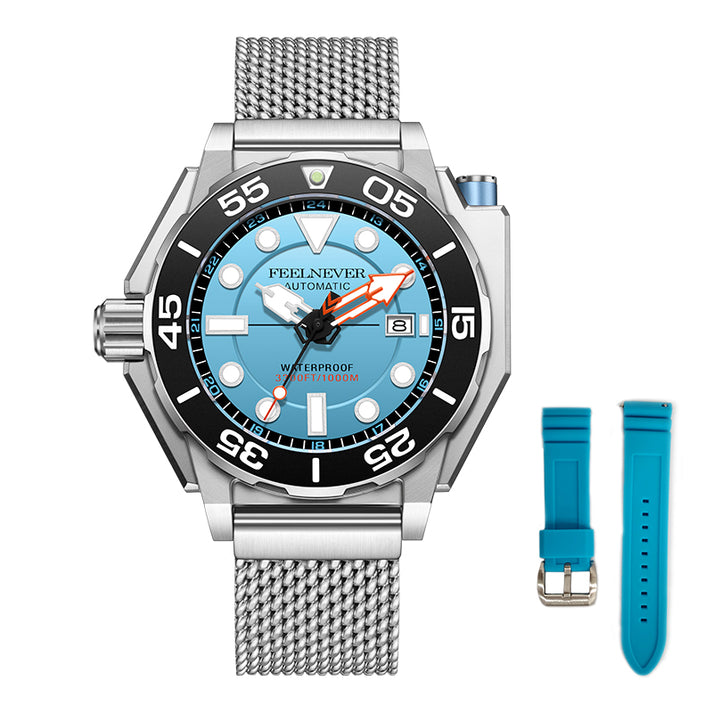
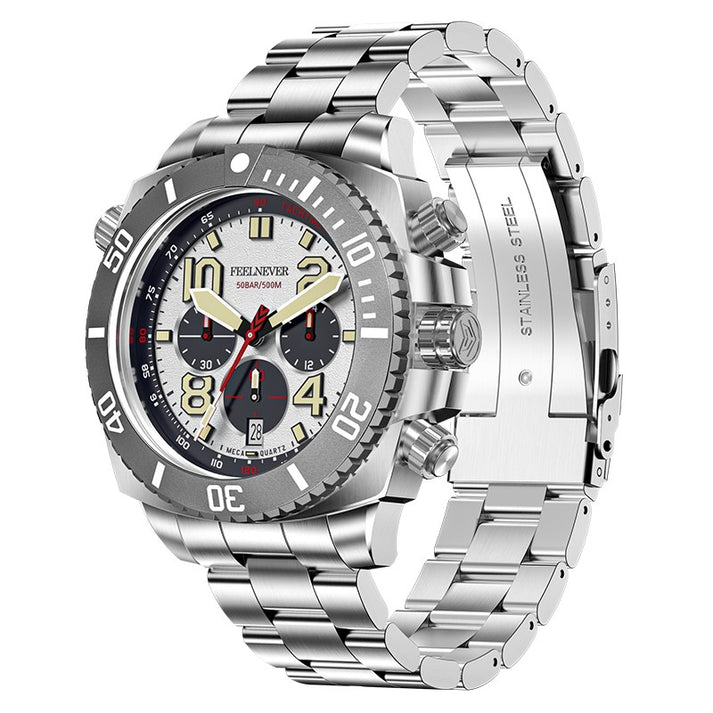
Dive-ready picks from FutureWristTech
Built for water, not just styled for it — three serious options.
🏁Conclusion: What You Can Do With 30 Bar Watches
In the end, 30 bar water resistance is not about chasing an impressive depth number. It is about choosing a watch with the safety margin, build quality, and long-term confidence that real water use demands. When a watch is built properly and maintained well, 30 bar gives you the kind of headroom that makes swimming, snorkeling, and repeated ocean use feel far less uncertain.
Explore our 30 bar water resistant dive watches and choose a watch built for real life around water, not just the spec sheet.
Shop 30 bar dive watches🔗 Reference this guide
Watch blogs and writers are welcome to cite this explainer. Copy the ready-made citation below.
FutureWristTech. "30 Bar Water Resistance Explained: 300m True Dive Watches." FutureWristTech Blog, 2025. https://www.futurewristtech.com/collections/30-bar-water-resistant-dive-watches
FAQ Section
Yes, in many cases it is. A properly built and properly maintained 30 bar watch sits firmly in dive-watch territory and is commonly considered suitable for serious underwater use.
Yes. Swimming and snorkeling are exactly the kind of activities a genuine 30 bar watch is designed to handle.
Because the rating reflects pressure-tested performance under controlled conditions, not a simple promise of real-world dive depth.
One of the biggest causes is crown misuse. An unsecured crown, operating controls when wet, heat exposure, impacts, and old seals can all increase failure risk.
Once a year is a smart rule for frequent water users. Every two years is a reasonable baseline for lighter use.
Yes. Titanium is widely respected for its corrosion resistance and lightweight strength, making it a strong material choice for ocean-oriented watches.